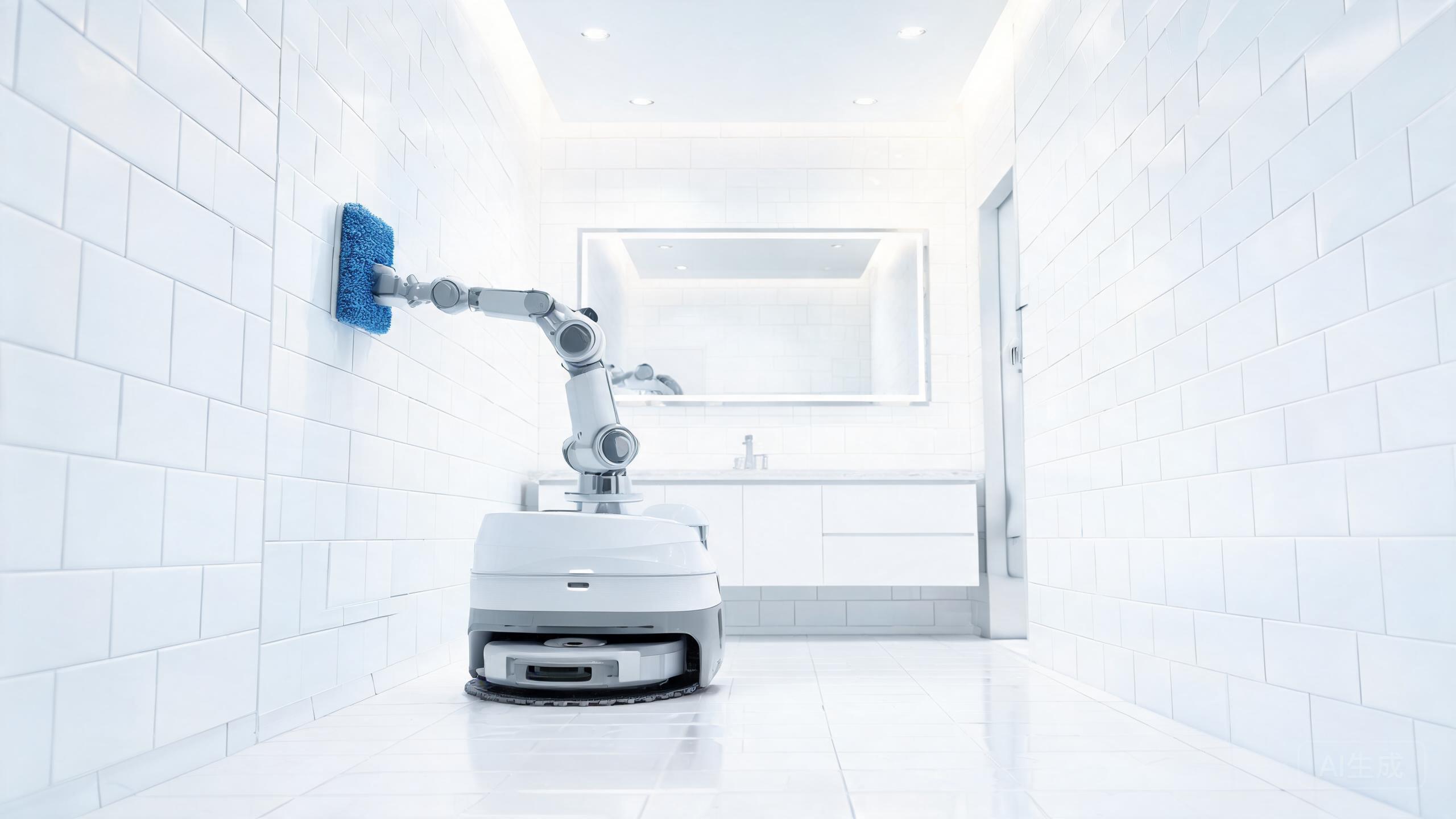
Pudu's SH1 arrived with a modest 7.5 rating but a big claim: multi-surface vertical cleaning with roughly 80% water savings versus manual methods. Rather than retesting its brushes or mapping its coverage, this update looks at the business side of the story. As restroom cleaning robot 2026 deployments shift from pilot projects to line items in facility budgets, the SH1 is a useful case study in what buyers are actually paying for, and what they should expect back.
From Pilot Program to Budget Line: Why 2026 Is the Tipping Point
For years, restroom automation lived in innovation labs. In 2026 it is moving into ordinary operating budgets. The SH1 reflects that shift: it is not a science project but an extension of Pudu's established service-robot line, which means buyers are evaluating it the same way they evaluate other service equipment, on uptime, consumables and staffing impact. The pitch is straightforward. A restroom cleaning robot 2026 model that handles vertical surfaces across multiple fixtures can absorb part of the routine wipe-down workload, and the 80% water saving claim gives finance teams a measurable sustainability metric to attach to the purchase.
Reading the Restroom Robot Cost Equation
Restroom robot cost is rarely just the sticker price. The SH1's value case rests on three levers: water consumption, labor hours and brand trust. Water is the easiest to model because the 80% figure is stated directly. Labor is harder, since the robot's focus on vertical surfaces and its limited deep scrubbing mean staff still handle floors, grout and heavy soil. Brand trust is the quiet third lever. Pudu's service-robot lineage reduces the perceived risk of being an early adopter, which matters when a facility manager has to justify commercial restroom cleaning automation to a skeptical operations director. Buyers should build their payback model around partial task relief, not full replacement.
Where a Robotic Arm Restroom Cleaner Fits in the Workflow
The most interesting operational question is not whether the SH1 cleans well, but where it sits in a shift. A robotic arm restroom cleaner is best deployed as a between-peak runner: it cycles through fixtures during low-traffic windows, keeps vertical surfaces presentable, and hands off to human crews for periodic deep work. This hybrid pattern is becoming the default in commercial restroom cleaning automation because it avoids the two failure modes of full automation, either overpromising on heavy soil or idling during quiet hours. Facilities testing the SH1 should track how often it runs unattended, how many manual touch-ups follow each cycle, and whether water savings hold up across a full month rather than a single demo.
The Evaluation Checklist Buyers Keep Forgetting
A bathroom cleaning robot review usually covers cleaning quality, and the SH1's trade-offs are already documented: strong on multi-surface vertical work, weaker on deep scrubbing. What gets skipped is the surrounding cost. Consumables, replacement parts, software updates and staff retraining all land in year two. Because the SH1 inherits Pudu's service-robot support structure, spare-part availability and service response times are likely more predictable than those of a startup entrant, and that predictability has real budget value. The practical advice for 2026 buyers is to request a total cost of ownership sheet alongside the demo, and to insist that water savings be verified on site rather than accepted from a spec page.
Our verdict
The Pudu SH1 is not the robot that eliminates restroom labor, and its 7.5 rating reflects that honesty. It is, however, a clear signal of where the market is heading: brand-backed, water-conscious machines that slot into existing crews rather than replacing them. For facilities weighing commercial restroom cleaning automation in 2026, the smart move is to treat the SH1 as one component of a hybrid workflow, model the restroom robot cost over three years instead of one, and let verified water data, not marketing claims, close the business case.