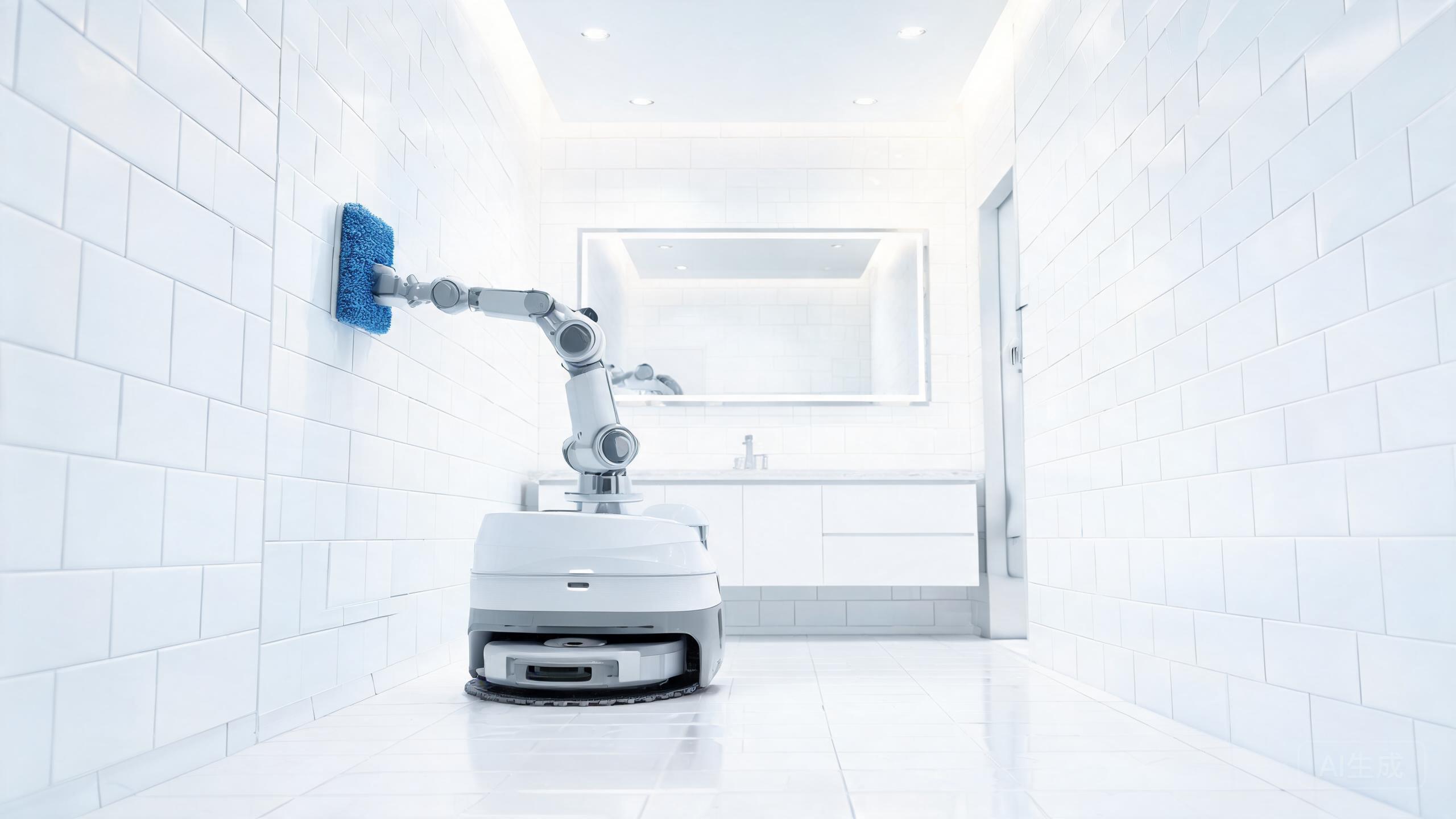
Most early coverage of the Primech AI Hytron focuses on what it does: a 6-DoF arm, an NVIDIA Jetson brain, and electrolyzed-water disinfection tested at over 99% germ kill. This assessment takes a different angle. Instead of a feature tour, we look at what it would mean to actually own and maintain this autonomous toilet cleaning robot over months and years, and where a bathroom cleaning robot review should focus when the product is still pre-commercial.
Why Long-Term Durability Is the Real Question
The Hytron is rated 9.5 and described as one of the most complete autonomous restroom robots announced to date, but the product data also flags it as very new and pre-commercial. That combination matters for durability. A restroom cleaning robot 2026 buyer is not only purchasing a 6-DoF arm and electrolyzed-water disinfection; they are committing to a maintenance relationship with a young platform. The NVIDIA Jetson compute module is a known, serviceable component, but the arm's joints, seals, and end-effector will face repeated exposure to moisture, cleaning chemistry, and hard surfaces. Those are the parts that determine whether commercial restroom cleaning automation stays reliable after the warranty period.
Wear Points: Arm, Seals, and Water System
In a robotic arm restroom cleaner, the arm is the highest-wear assembly. A 6-DoF design gives the Hytron reach and dexterity, but every additional degree of freedom is another joint, another motor, and another seal that can degrade. Because the Hytron's disinfection method is electrolyzed water, the fluid path also becomes a durability item: electrodes, tubing, and spray components must resist scale and residue over time. The product's disinfection-first design, noted as a trade-off against deep scrubbing, may actually help longevity by reducing abrasive contact, but it also means the water system carries more of the cleaning burden. For owners, the practical takeaway is to budget for periodic seal and electrode service rather than assuming a sealed, maintenance-free unit.
Ownership Cost and Downtime Planning
Restroom robot cost is usually discussed as a purchase price, but long-term ownership cost includes consumables, service visits, and downtime. The Hytron's >99% tested germ kill and electrolyzed-water disinfection reduce chemical consumable spend, which is a genuine advantage in high-traffic facilities. The offsetting risk is that a pre-commercial platform may have longer parts lead times and fewer independent service options. In commercial restroom cleaning automation, an idle robot during peak hours can be more expensive than the robot itself. Buyers should ask vendors about seal replacement intervals, electrode lifespan, and whether the 6-DoF arm can be serviced on site. Until those answers are standardized, the Hytron is best treated as a carefully monitored pilot rather than a set-and-forget asset.
What Would Make It a Durable Long-Term Win
The Hytron already has the ingredients for durability: a serviceable NVIDIA Jetson compute platform, a disinfection method that avoids harsh scrubbing, and a design aimed at autonomous operation. What it lacks is field history. A strong long-term outcome would look like documented seal and electrode service intervals, stable arm calibration after thousands of cycles, and consistent >99% germ kill as components age. If Primech AI publishes that kind of durability data, the Hytron could move from an intriguing autonomous toilet cleaning robot to a dependable restroom cleaning robot 2026 fleets can standardize on. Until then, this bathroom cleaning robot review recommends pilot deployments with clear wear-tracking.
Our verdict
The Primech AI Hytron is a compelling autonomous toilet cleaning robot with a 6-DoF arm, NVIDIA Jetson compute, and electrolyzed-water disinfection above 99% tested germ kill. Its durability story, however, is still unwritten because it is very new and pre-commercial. For 2026 buyers, the smart approach is to treat restroom robot cost as a multi-year service commitment, track arm and water-system wear from day one, and keep expectations aligned with a disinfection-first design rather than a heavy-scrubbing one.