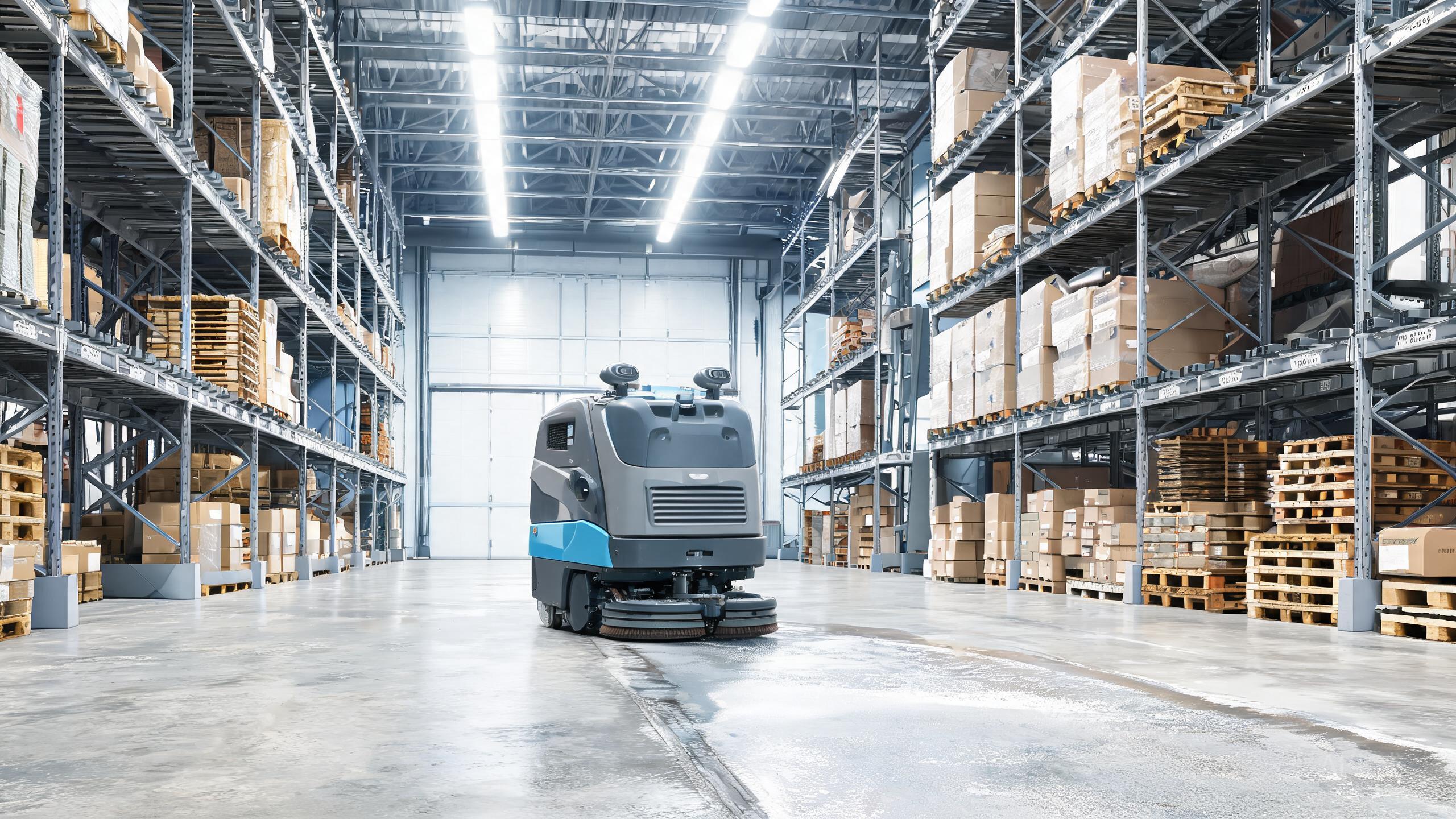
Two autonomous scrubbers, two very different missions. In this commercial cleaning robot review we pit the compact OrionStar CleaniBot M1 (rated 9.3) against the high-throughput Tennant X6 ROVR (rated 8.3). One is built to slip through narrow retail aisles; the other is built to swallow huge warehouse floors in a single shift. Below we compare them honestly on performance, features, value and fit, and weigh the autonomous scrubber vs manual cleaning trade-off so you can choose the best autonomous floor scrubber 2026 for your operation.
Performance: Compact Precision vs Single-Shift Throughput
The CleaniBot M1 maps an entire store via SLAM in under 30 minutes and then navigates autonomously, docking to recharge on its own when needed. Its 55 cm footprint lets it reach narrow retail aisles that larger machines simply cannot enter. The trade-off is a small tank that limits long runs. The Tennant X6 ROVR takes the opposite approach: it cleans up to 75,000 square feet per shift, making it the throughput champion for cavernous warehouses and logistics floors. In short, the M1 wins on maneuverability and the X6 ROVR wins on raw coverage. If you are weighing autonomous scrubber vs manual cleaning, both replace repetitive labor, but on very different floor sizes.
Features and Navigation: SLAM Mapping vs High-Capacity Design
Both machines are autonomous scrubbers, but their feature priorities differ. The CleaniBot M1 leans on SLAM mapping and navigation plus an auto-recharge dock, a package tuned for tight, changing retail layouts. The X6 ROVR leans on a high-capacity design and Tennant service support, aimed at demanding warehouse and logistics environments. When buyers research robotic floor scrubber brands, SLAM floor scrubber cost is often the sticking point: SLAM-based mapping adds intelligence and convenience, and the M1's price is high for its size precisely because of that compact, smart package. The X6 ROVR instead invests in capacity and service depth, which matters more on large industrial sites.
Value and ROI: Which One Pays Back Faster?
Value depends entirely on your floor. The X6 ROVR is very expensive and needs room to move, but on the largest sites its steep price is justified by the labor it replaces, which is exactly how warehouse cleaning robot ROI should be judged. The CleaniBot M1 is pricey for its size and its small tank limits long runs, yet for a boutique or narrow-aisle store it delivers commercial scrubbing in a footprint no rival matches, so the payback comes from consistent daily cleaning without dedicated staff. Neither is cheap; the question is which cost structure fits your building. Compare total commercial cleaning robot cost against the shifts you currently staff, and the right answer usually becomes obvious.
Who Each One Suits Best
Choose the OrionStar CleaniBot M1 if you run boutiques, narrow retail aisles or compact stores where maneuverability and fast SLAM mapping matter more than raw coverage. It is the standout pick for tight spaces and a strong candidate in any 2026 commercial scrubber shortlist. Choose the Tennant X6 ROVR if you manage cavernous warehouses or logistics floors and need maximum single-shift coverage backed by Tennant service support; its footprint demands open space. In short: small and nimble versus large and relentless.
Our verdict
Verdict: for most mixed-use and retail sites, the OrionStar CleaniBot M1 is the better all-round buy thanks to its 55 cm frame, sub-30-minute SLAM mapping and auto-recharge dock, even though its small tank and high price for size are real drawbacks. The Tennant X6 ROVR wins only when sheer coverage rules: its 75,000 sq ft per shift makes it the right machine for large warehouses and logistics floors, where its high price is offset by replaced labor. Match the machine to your floor size and the decision is clear.