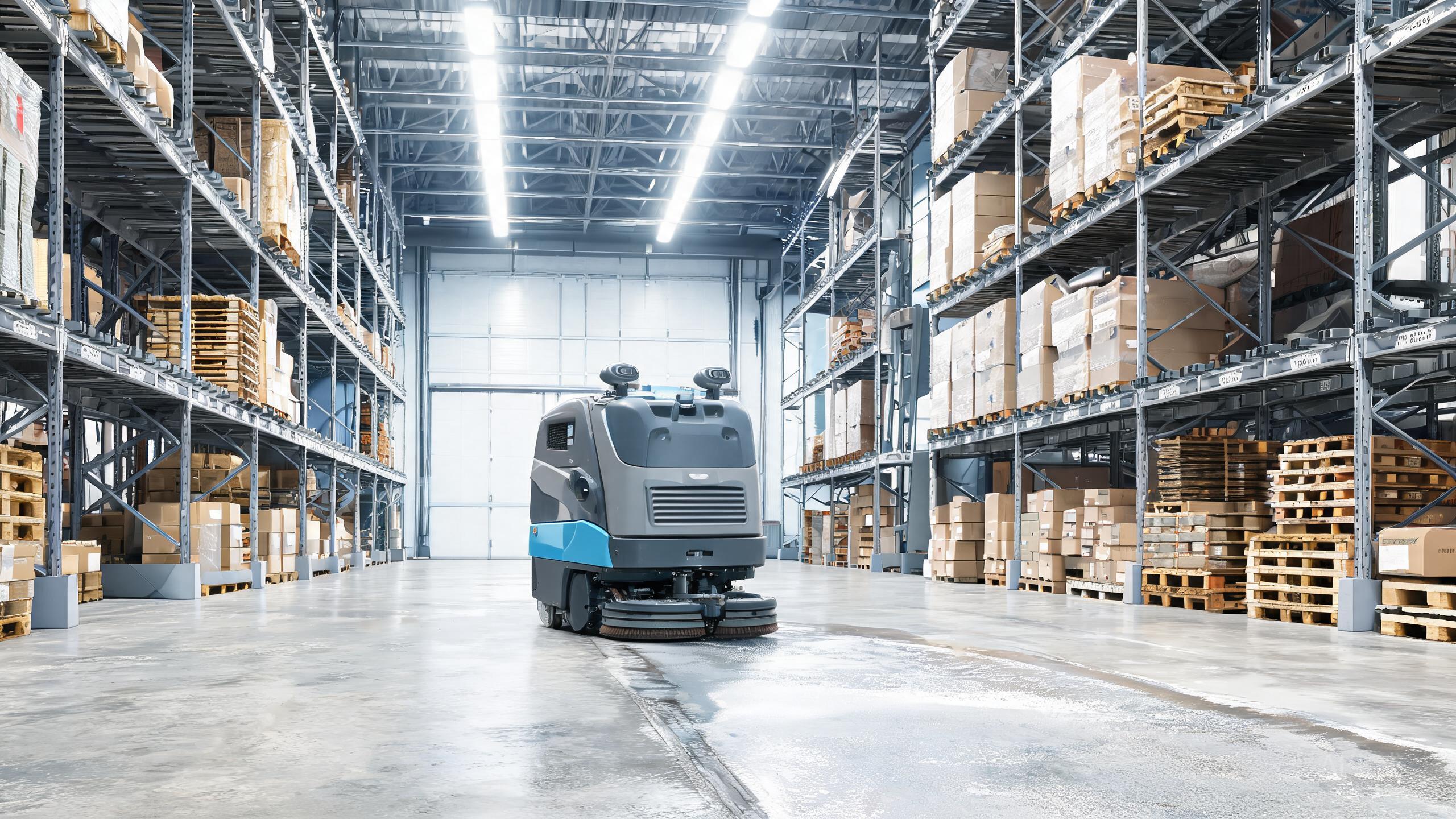
SLAM, or simultaneous localization and mapping, is the technology that separates a truly autonomous floor scrubber from a machine that simply drives in a straight line. It lets a robot build a map of a space, know exactly where it is on that map, and plan efficient cleaning routes without tape, beacons, or a human guide. For anyone shopping for the best autonomous floor scrubber 2026 has to offer, understanding SLAM is the single most useful thing you can do, because it directly affects coverage, safety, deployment time, and the SLAM floor scrubber cost you will ultimately pay. This editorial breaks down how SLAM works, how it shapes the autonomous scrubber vs manual cleaning debate, and where leading robotic floor scrubber brands land in our commercial cleaning robot review.
How SLAM Actually Works in a Floor Scrubber
A SLAM-equipped scrubber uses sensors such as LiDAR, depth cameras, and wheel odometry to sense walls, shelves, and obstacles while it cleans. As it moves, it stitches those readings into a map and continuously corrects its own position against that map, so it never loses track of where it is. The payoff is route planning: instead of random or fixed paths, the robot covers a floor in orderly passes and returns to charge or refill on its own. In our commercial cleaning robot review, machines like the OrionStar CleaniBot M1 (rated 9.3, our pick for tight retail spaces) and the ECOVACS DEEBOT PRO M1 (9.0, best all-in-one commercial floor care) show how mature SLAM delivers reliable coverage in cluttered, changing environments. The Kärcher KIRA B 200 (8.8, flagship for large areas) and Tennant X6 ROVR (8.3, highest single-shift coverage) lean on SLAM to handle big footprints efficiently.
Why SLAM Drives Cost and the Manual Comparison
SLAM is a major reason SLAM floor scrubber cost sits above that of a basic ride-on scrubber. The sensor suite, onboard computing, and mapping software add upfront expense, but they also remove hidden costs: no tape or beacon installation, faster redeployment when layouts change, and less supervision. That is why the autonomous scrubber vs manual cleaning comparison increasingly favors robots on large, repetitive floors. A SLAM machine cleans the same route consistently shift after shift, which matters for warehouses and retail chains where labor turnover is high. The Nilfisk Liberty SC50 (7.8, certified safety-first scrubber) and LionsBot R3 Scrub Pro (7.3, compact touchscreen retail scrubber) illustrate how SLAM plus safety certification can justify the investment in public-facing environments.
SLAM and Warehouse Cleaning Robot ROI
For warehouse cleaning robot ROI, SLAM is the deciding factor. Large distribution centers have long, predictable aisles, which is exactly where autonomous scrubbing shines. A SLAM robot maps the aisles once, then cleans them repeatedly without a driver, freeing staff for other tasks. The Avidbots Neo 2 (8.0, best for continuous heavy scrubbing) and Gausium Scrubber 75 (7.0, widest-path industrial scrubbing) are built for this kind of sustained, wide-area work. The Pudu CC1 Pro (7.5, multi-function value pick) offers a lower entry point for smaller facilities testing autonomy. When you model payback, count saved labor hours, reduced chemical waste from consistent dosing, and fewer accidents; SLAM-enabled consistency is what makes those savings predictable enough to budget against.
Choosing Among Robotic Floor Scrubber Brands
When comparing robotic floor scrubber brands, look past the rating and ask how each system handles mapping, re-mapping, and obstacle avoidance in your specific space. A compact unit like the OrionStar CleaniBot M1 suits tight retail aisles, while the Kärcher KIRA B 50 (8.5, mid-size roller-brush scrub-and-sweep) fits mixed floors that need both scrubbing and sweeping. For a broader shortlist, consult a 商用洗地机器人排名 2026 roundup and match the SLAM maturity to your layout complexity. The best autonomous floor scrubber 2026 for your site is the one whose navigation you can trust on day one and whose deployment does not require an engineer.
Our verdict
SLAM is not a marketing footnote; it is the engine of autonomous cleaning. It explains why a SLAM floor scrubber costs more upfront, why robots increasingly win the autonomous scrubber vs manual cleaning comparison, and why warehouse cleaning robot ROI can be modeled with confidence. Whether you choose the OrionStar CleaniBot M1 for tight retail, the Kärcher KIRA B 200 for large areas, or the Tennant X6 ROVR for maximum single-shift coverage, judge each machine by how well its navigation fits your floor. That is the real test behind any commercial cleaning robot review in 2026.