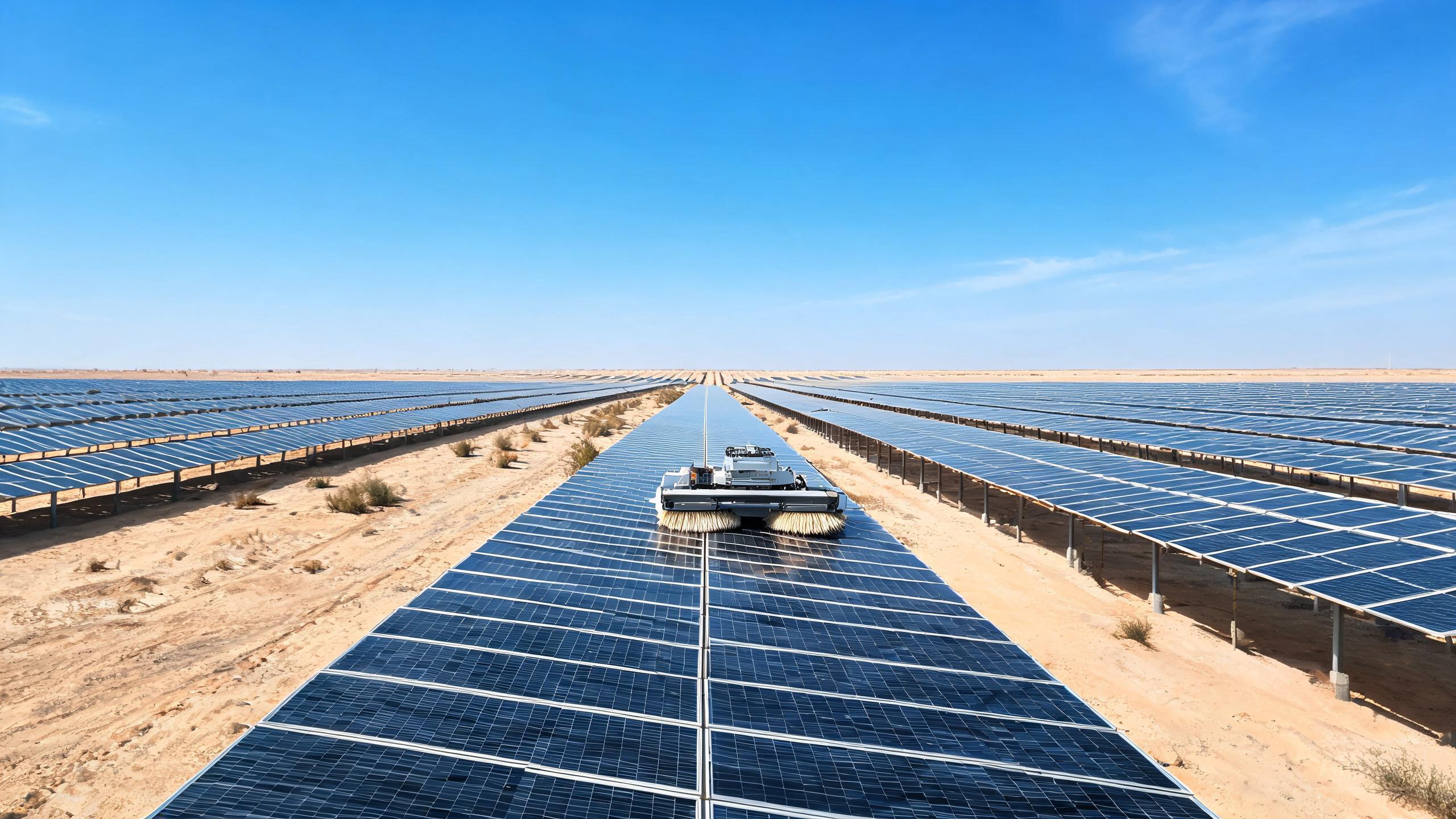
When you manage a utility-scale solar farm on dusty, uneven ground, wheeled cleaning robots often slip, stall, or miss rows. The X8 Robotics X8 Plus takes a different path: it uses tracks instead of wheels. In this guide, we break down what that means for real-world operation, how it compares to waterless and wet methods, and whether it deserves a spot in your 2026 budget as a best solar panel cleaning robot 2026 contender.
Why Tracks Matter for Ground-Mounted PV Arrays
The X8 Plus is explicitly designed for ground-mounted plants, not rooftop or carport systems. Its tracked drive provides traction on loose gravel, packed dirt, and even grass—conditions where wheeled robots lose grip. If your site has uneven terrain or frequent dust accumulation, this machine can traverse rows that would stop a typical wheeled unit. This is a core advantage when evaluating utility scale PV cleaning robot options. The simple mechanical design also reduces breakdown risk, though it lacks the sophisticated sensors of pricier rivals.
Dry vs. Wet Cleaning: Where the X8 Plus Fits
The X8 Plus uses a brush-based cleaning method, which typically operates dry. Dry vs wet solar panel cleaning is a key debate in the industry. Dry brushing is ideal for arid regions where water is scarce, and it avoids the mineral residue that can streak panels after wet cleaning. However, dry brushing may not fully remove sticky bird droppings or dried mud—those often require wet methods. For most dusty fields, a waterless solar panel cleaner like the X8 Plus can restore output effectively. But if your site faces heavy soiling beyond dust, you might need to supplement with wet cleaning. The X8 Plus does not include a water tank or spray system, so it's strictly for dry operations.
Solar Panel Cleaning Robot Cost: Is the X8 Plus Worth It?
One major caveat with the X8 Plus is that pricing is contact-only—you must request a quote. This is common for utility-scale equipment, but it makes solar panel cleaning robot cost comparisons difficult. Based on its niche positioning, expect it to be priced for commercial operators, not homeowners. When weighing costs, consider the potential output gains. Research consistently shows that clean panels can boost energy yield by 5–20% depending on soiling. Does solar panel cleaning improve output? Absolutely. The X8 Plus's tracked mobility allows more frequent cleaning on rough terrain, which can maximize those gains. However, its limited market presence means support and spare parts may be harder to source than established brands.
Operational Considerations and Limitations
Before you invest, note that the X8 Plus is built for large, flat sites. It is not designed for sloped roofs or carports. Its tracked system adds weight and may leave tread marks on soft ground. Also, because it's a ground-plant cleaner, it cannot climb over obstacles taller than its clearance. For a best solar panel cleaning robot 2026 list, it earns a spot only if your primary challenge is dusty, uneven terrain. Otherwise, a wheeled or rail-based robot might be more practical. Its simple design means fewer electronics to fail, but also fewer smart features like mapping or automatic scheduling.
Our verdict
The X8 Robotics X8 Plus is a specialized tool, not a universal solution. It shines on dusty, ground-mounted utility plants where wheeled robots fail, offering a waterless cleaning method that can improve output without water logistics. If your site matches that profile and you can manage the contact-only pricing, it's a viable candidate for a 2026 fleet. But for most buyers, the lack of market presence and limited support are real risks. Weigh your terrain, soiling type, and budget before making a decision.