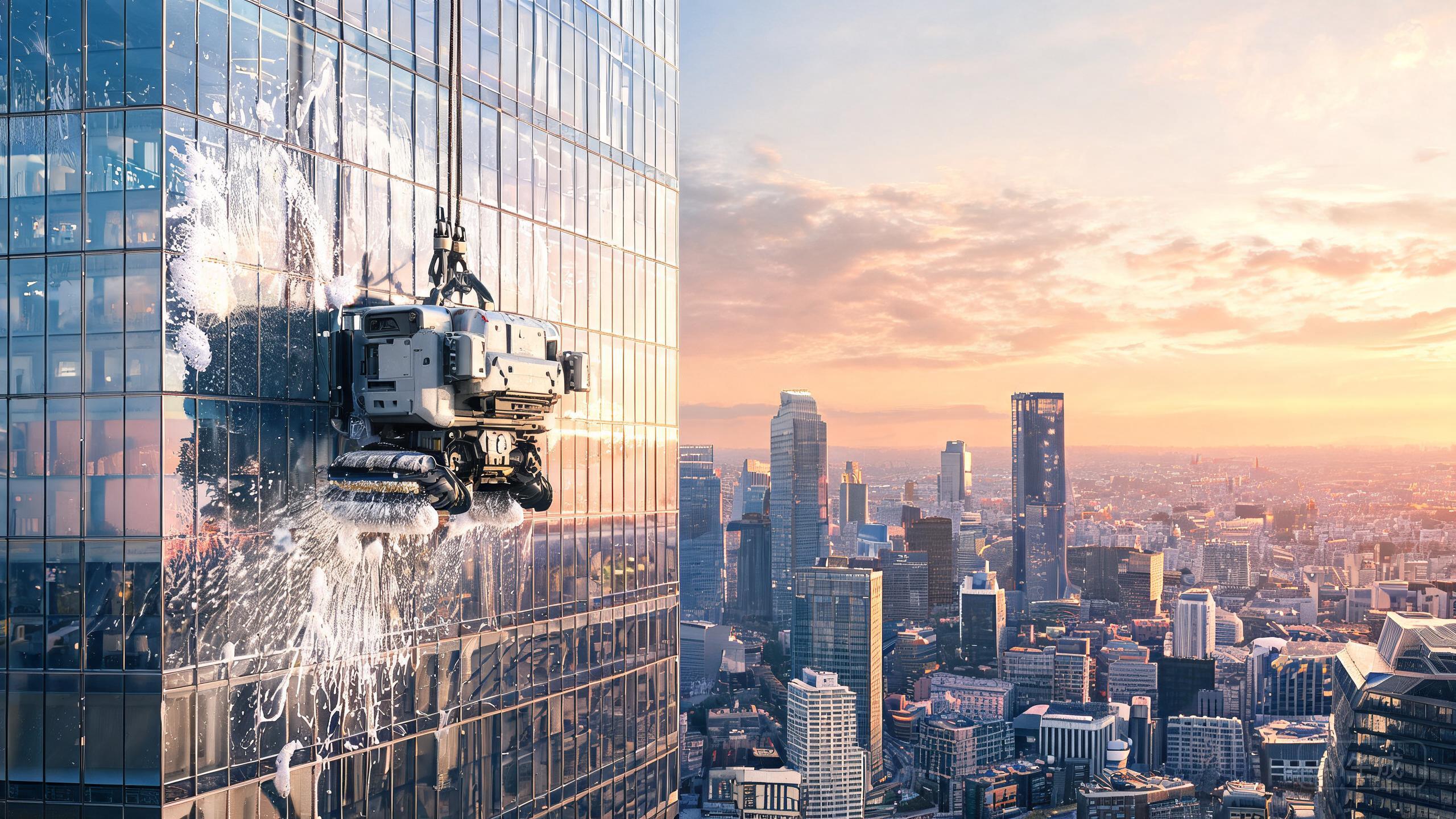
The X-Human LingKong K3 is a facade cleaning robot 2026 contender designed specifically for curtain-wall skyscrapers. With an 8.2 rating, it represents a growing wave of high rise facade cleaning automation from Chinese manufacturers. This building facade cleaning robot review dives into what makes the K3 stand out, its limitations, and how robotic facade cleaning vs rope access shapes your decision.
Curtain-Wall Focus: Built for Skyscrapers
The LingKong K3 is not a general-purpose window cleaner; it is a facade cleaning robot 2026 model engineered for continuous curtain-wall facades. Its climbing locomotion allows it to traverse vertical glass and metal surfaces on supertall buildings, making it a serious tool for high rise facade cleaning automation. Unlike smaller robots that struggle with large expanses, the K3 integrates adhesion and cleaning modules to handle the demanding geometry of modern skyscrapers. If you manage a property with extensive curtain-wall glazing, this machine is a candidate worth evaluating.
Integrated Cleaning Modules and Performance
The K3’s key strength lies in its integrated cleaning modules, which combine washing, scraping, and drying functions in a single pass. This design reduces the need for multiple passes, improving efficiency on tall facades. However, public specifications are sparse, so we cannot confirm water flow rates, brush materials, or cleaning speed. In our building facade cleaning robot review, we note that while the K3 shows promise, buyers should request detailed performance data from X-Human before committing. For glass facade cleaning robot cost, the K3 sits in the premium segment, reflecting its specialized capabilities.
Robotic Facade Cleaning vs Rope Access: A Safety and Cost Perspective
One of the biggest selling points of the K3 is its role in high rise facade cleaning automation, which aims to reduce reliance on rope access. Traditional rope access is dangerous, labor-intensive, and subject to weather constraints. Robotic solutions like the K3 can operate with less human exposure, though they still require setup and monitoring. When comparing robotic facade cleaning vs rope access, consider upfront equipment costs versus long-term labor savings and safety improvements. The K3’s limited international track record means that in some regions, rope access may still be more reliable, but the trend is clearly toward automation.
Pros, Cons, and Who Should Buy
Pros: The K3 is curtain-wall focused, capable of supertall buildings, and features integrated cleaning modules. Cons: It has a limited international track record and sparse public specs. This makes it a strong choice for early adopters in Asia, particularly China, where facade cleaning robot 2026 models are gaining traction. For property managers in other regions, it’s wise to request references and trial runs. In terms of glass facade cleaning robot cost, the K3’s price is likely competitive against custom automation systems, but you should budget for installation, training, and maintenance.
Our verdict
The X-Human LingKong K3 is a credible entrant in the facade cleaning robot 2026 space, offering specialized curtain-wall cleaning for skyscrapers. While its sparse public specs and limited international presence are drawbacks, its integrated modules and supertall capability make it a compelling option for high rise facade cleaning automation. As robotic facade cleaning vs rope access evolves, the K3 represents a step toward safer, more efficient building maintenance. We recommend it for forward-thinking teams ready to pilot advanced automation.