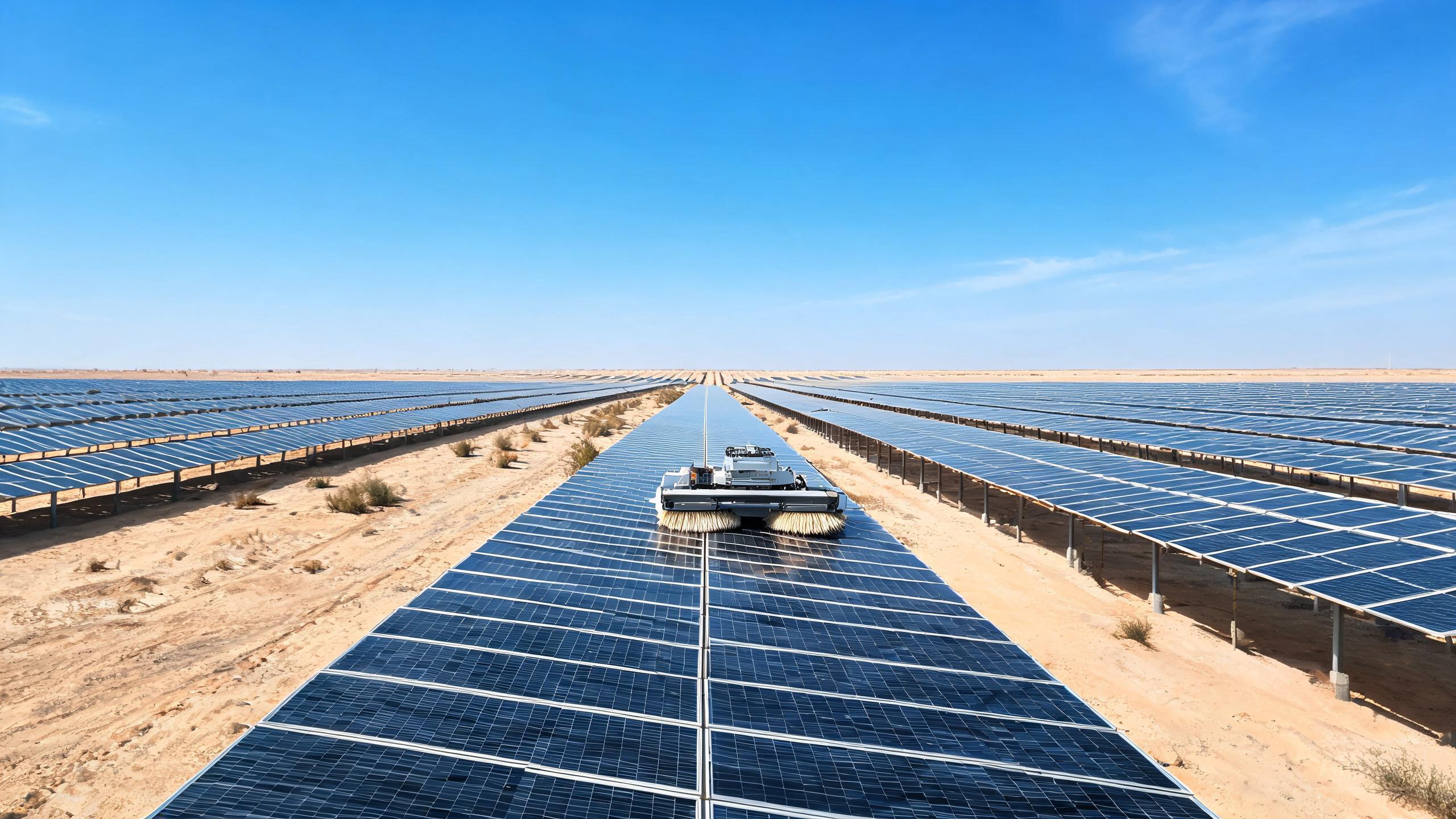
When most people search for the best solar panel cleaning robot 2026, they imagine massive utility-scale PV cleaning robots crawling over acres of panels. But what if you own a small RV, a boat, or a tiny off-grid cabin? The Tengda TT-1500 is a different breed – a lightweight, handheld cleaner designed specifically for those smaller panels. In this review, we break down whether this sub-$2,000 device makes sense for individual owners, how it compares in the dry vs wet solar panel cleaning debate, and whether it truly answers the question: does solar panel cleaning improve output for your specific setup?
Design and Portability: Built for the Road, Not the Solar Farm
The Tengda TT-1500’s biggest selling point is its form factor. Unlike bulky utility scale PV cleaning robots that require rails, water tanks, and professional installation, this unit is a handheld device you can carry with one hand. Its lightweight construction means you can easily store it in an RV compartment or boat locker. The manual operation is straightforward – no complex programming, no remote control learning curve. For RV owners who park in varying conditions, this portability is a game-changer. You can clean panels on the go, whether you’re at a campsite or docked at a marina. However, this design choice comes with a trade-off: it’s not for large arrays. If you manage a solar farm, this is not your tool. But for a couple of panels on a roof rack, it’s arguably the most convenient option in the market.
Dry vs Wet Solar Panel Cleaning: Where the TT-1500 Fits
A key consideration in any solar panel cleaning review is the method. The TT-1500 operates as a dry cleaning tool – it doesn’t require a water supply or detergent. This makes it a natural waterless solar panel cleaner, which is particularly appealing for RV owners who may not have easy access to water at remote campsites. In the dry vs wet solar panel cleaning debate, dry methods are often safer for panels because they avoid mineral deposits and water spots that can occur with hard water. The TT-1500’s manual action lets you control pressure, reducing the risk of scratching the glass. But does solar panel cleaning improve output? Absolutely – even a thin layer of dust can cut efficiency by 5-10%. For an RV that sits for weeks between trips, a quick pass with the TT-1500 can restore lost generation. However, be aware that heavy, baked-on bird droppings or tree sap may require a damp cloth first, as dry-only cleaning can smear these residues.
Solar Panel Cleaning Robot Cost Analysis: Is the TT-1500 Worth It?
When evaluating solar panel cleaning robot cost, the TT-1500 sits at an entry-level price point – under $2,000. Compare that to utility scale PV cleaning robots that can cost tens of thousands of dollars, or even professional cleaning services that charge per panel visit. For an individual owner with 2-4 panels, hiring a service every few months could easily exceed the TT-1500’s price within a year or two. The TT-1500 pays for itself after just a few cleanings. Moreover, because it’s manual, there are no ongoing battery replacements or motor maintenance costs. The simplicity is a financial advantage. However, you should factor in your own labor time. If you have a large roof array (10+ panels), the manual effort becomes tedious, and a semi-automated robot might be a better long-term investment. But for the RV and off-grid niche, the TT-1500 offers the lowest total cost of ownership.
Performance Limitations: What to Expect in Real-World Use
The TT-1500 is not without its drawbacks. Its lightweight design and manual operation mean it’s only suitable for small panels – typically those found on RVs, boats, and small off-grid systems. Attempting to clean a large ground-mounted array would be exhausting and time-consuming. The cleaning effectiveness is dependent on your technique; you need to apply consistent pressure and overlap passes to avoid streaks. In dusty environments, you may need to clean more frequently, but the ease of use encourages regular maintenance. Another limitation is that it doesn’t have any water or brushing automation, so for heavily soiled panels, you might need to pre-rinse with a hose. Still, for its target audience, the TT-1500 delivers reliable performance. It’s not the best solar panel cleaning robot 2026 for commercial use, but for personal RV ownership, it’s a practical, budget-friendly solution.
Our verdict
The Tengda TT-1500 is a niche product that excels in its intended role. It’s not a utility scale PV cleaning robot, and it won’t replace professional services for large arrays. But for RV owners, boaters, and off-grid enthusiasts, it offers an affordable, portable, and effective way to keep panels clean. With a solar panel cleaning robot cost under $2,000, it answers the question of does solar panel cleaning improve output with a resounding yes – especially when you can do it yourself without water. If you’re looking for the best solar panel cleaning robot 2026 for small mobile setups, the TT-1500 deserves a spot on your shortlist. Just remember its limitations: manual effort and small panels only. For the right user, it’s a smart investment.