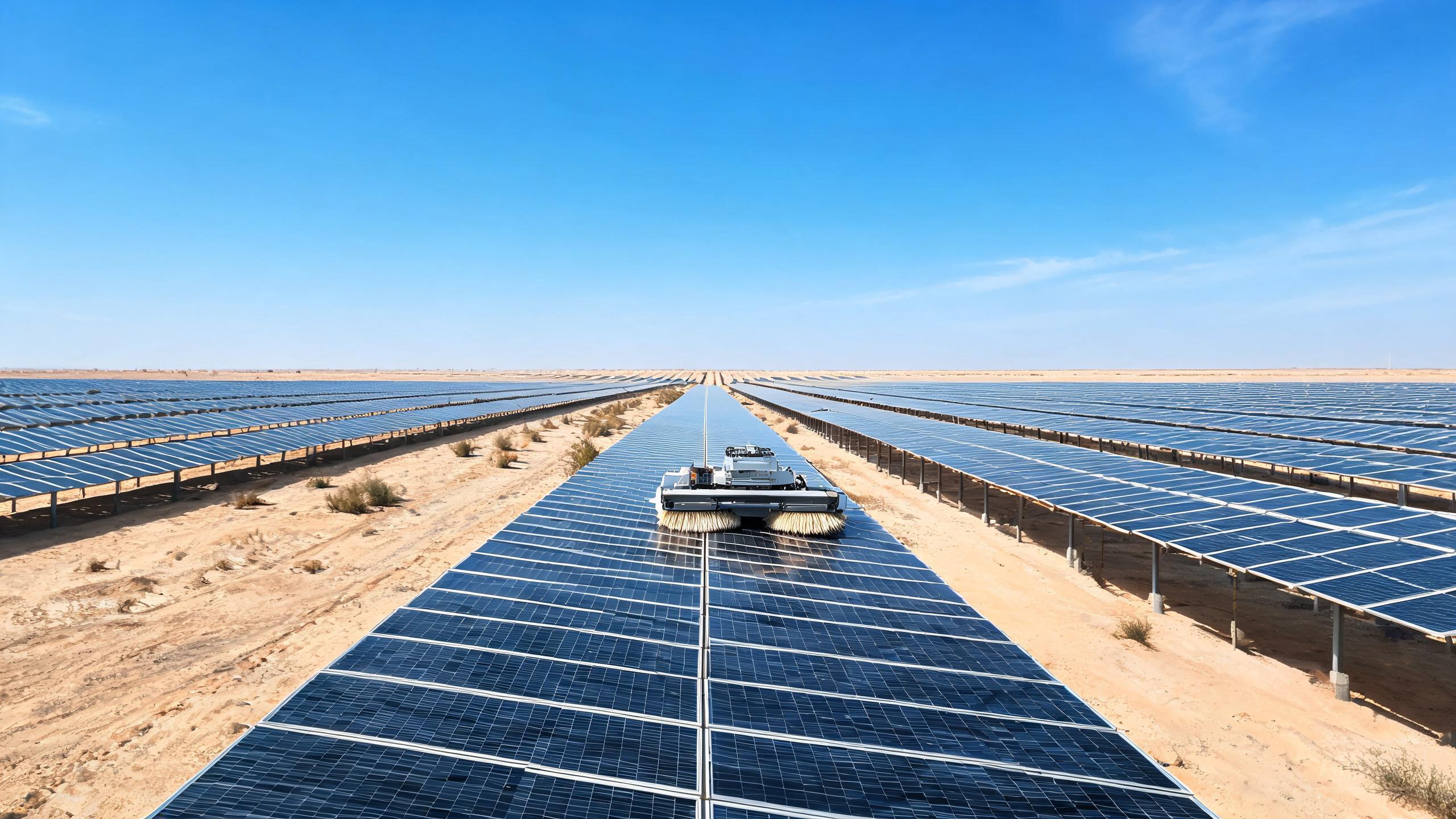
If you are shopping for the best solar panel cleaning robot 2026 has to offer, price is usually the first question and the hardest to answer. Most vendors, including TEAMANTS with its TAR01, quote by contact only. That makes budgeting tricky, especially for utility scale PV cleaning robot fleets where a single line item can swing a whole project. This guide skips the spec sheet and focuses on money: what drives solar panel cleaning robot cost, where a CE-certified semi-autonomous brushing unit like the TAR01 fits, and how to decide between a waterless solar panel cleaner and a traditional wet system.
What Actually Drives Solar Panel Cleaning Robot Cost
Three factors dominate the quote you eventually receive. First, certification and compliance: a CE-certified unit like the TAR01 carries testing and documentation overhead that non-certified imports avoid, and EU buyers often pay a premium for that paperwork because it de-risks procurement. Second, autonomy level: the TAR01 is semi-autonomous, meaning an operator still supervises it, which keeps the price below fully autonomous fleets but above manual brush poles. Third, scale and support: a single unit for a rooftop array is priced very differently from a utility scale PV cleaning robot order with spare parts, training, and service contracts bundled in. When vendors say contact-only pricing, they are really saying the number depends on all three.
Dry vs Wet Solar Panel Cleaning: The Hidden Cost Line
The dry vs wet solar panel cleaning debate is usually framed around performance, but it is really a cost question. Wet systems need water delivery, filtration, and sometimes reclamation infrastructure, all of which add capital and operating expense, especially in water-scarce regions. A waterless solar panel cleaner such as the TAR01's brushing approach removes the water logistics entirely, which lowers ongoing cost per cycle and simplifies deployment on sites without easy water access. The trade-off is that dry brushing may need more frequent passes in dusty conditions. For budget planners, the rule of thumb is simple: wet systems front-load infrastructure cost, dry systems spread cost across more cleaning cycles.
Does Solar Panel Cleaning Improve Output Enough to Justify the Spend?
This is the question every finance team asks, and the honest answer is: it depends on your soiling rate. In high-dust, low-rain regions, soiling losses can be significant, and regular cleaning measurably recovers yield. In mild climates with frequent rain, the gain may be modest. The TAR01's semi-autonomous design and CE-certified brushing system make it a reasonable middle-ground option: it is cheaper than a full autonomous fleet, compliant for EU projects, and simple enough to run on a predictable schedule. Before buying, model your local soiling loss against the robot's cost per cycle. If the recovered energy value exceeds the cleaning cost within your payback window, the purchase is justified.
Where the TAR01 Fits in a 2026 Procurement Shortlist
The TAR01 is not the cheapest option and not the most autonomous. Its advantage is compliance plus simplicity for EU-facing projects. If your tender requires CE documentation and you want a semi-autonomous brushing unit without the complexity of a full fleet management platform, it belongs on the shortlist. If you are running a large utility scale PV cleaning robot deployment and need maximum autonomy, look at fully autonomous alternatives and treat the TAR01 as a comparison benchmark. Note its two documented drawbacks: contact-only pricing, which slows budget approval, and slower performance on steep terrain, which matters for tracking arrays on uneven ground.
Our verdict
Budgeting a solar panel cleaning robot in 2026 means separating certification cost, autonomy cost, and water logistics cost. The TEAMANTS TAR01 sits in the compliance-friendly middle: CE-certified, semi-autonomous, brushing-based, and suited to EU projects where documentation matters. It will not win on price transparency or steep-terrain speed, but for buyers who need a defensible, compliant purchase, it is a sensible benchmark against which to compare every other quote.