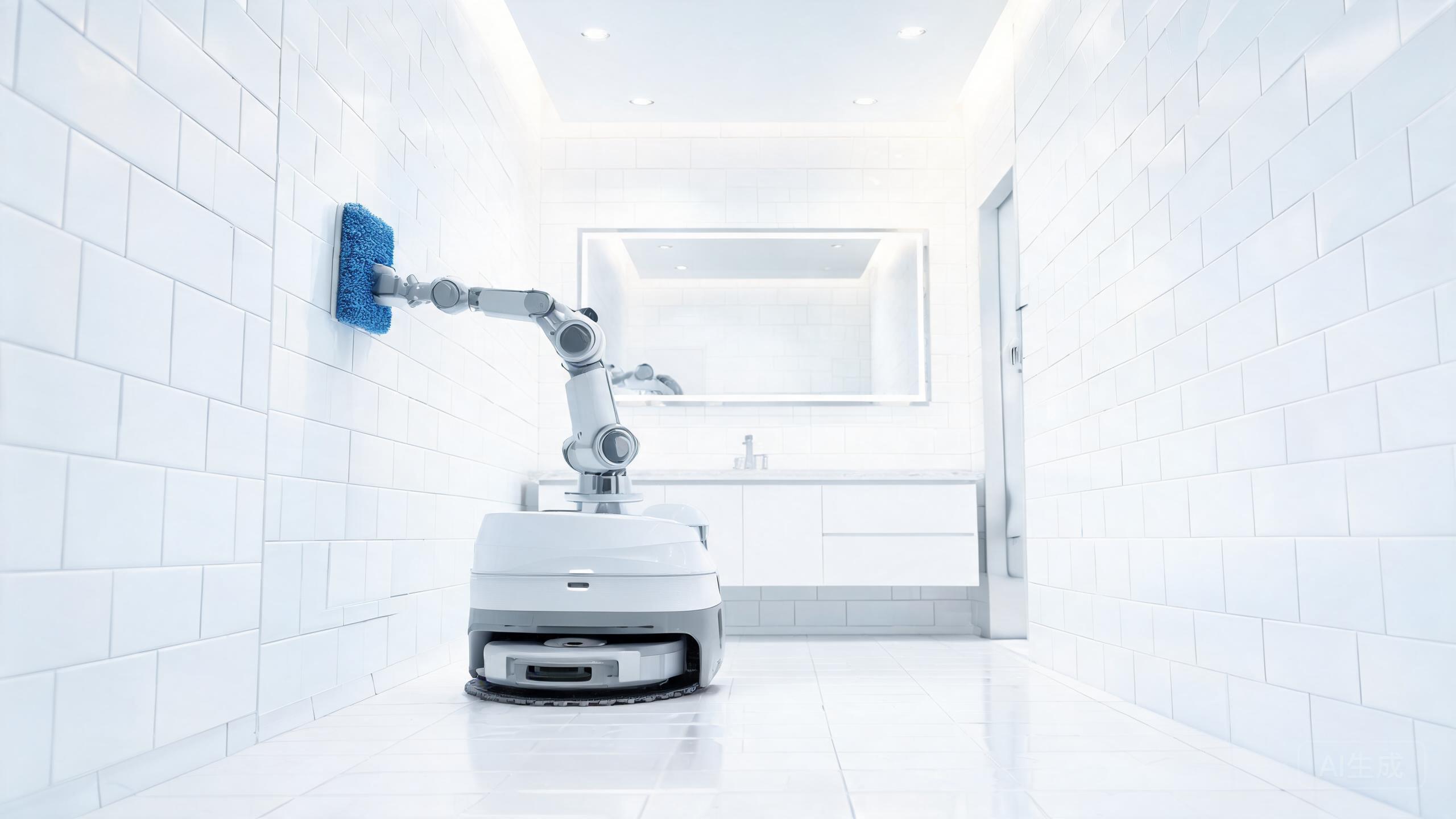
Most bathroom cleaning robot review articles focus on hardware specs, but the Somatic BCR deserves a different lens. This is not a robot you buy and park in a closet; it is a route-based service designed to run through commercial restrooms on a schedule. In this restroom cleaning robot 2026 review, we look at what the BCR actually does during a shift, where commercial restroom cleaning automation fits, and why the restroom robot cost conversation is really a service-contract conversation.
What the BCR Actually Does on a Route
The Somatic BCR is built around a simple idea: restrooms are repetitive, and repetition is what automation handles best. Its task list covers toilets, urinals and floors, plus litter pickup and supply refills. That combination matters because most restroom visits are not one big job but a chain of small ones. A robotic arm restroom cleaner that can move from fixture to fixture, pick up debris and top up consumables reduces the number of human trips needed. The BCR is an autonomous toilet cleaning robot in the practical sense: it follows a route, services what it finds, and moves on. It is not chasing speed records per fixture; it is chasing consistency across a whole facility.
Service Model vs. Equipment Purchase
The biggest shift in commercial restroom cleaning automation is that you may not buy the robot at all. Somatic's BCR is offered through a route-based service model, which means the restroom robot cost is wrapped into a contract rather than a one-time capital purchase. For facility managers, that changes the math. You are comparing a service line item against labor hours, not a machine against a machine. The trade-off is that per-fixture cleaning can be slower than a trained human moving quickly through a familiar restroom. The upside is that the BCR does not call in sick, does not skip the urinals, and does not forget the refill.
Where the BCR Fits Best
The BCR makes the most sense in facilities with many restrooms and predictable traffic: airports, malls, stadiums, campuses and large office towers. In those settings, a route-based autonomous cleaner can absorb the most repetitive chores and free staff for detail work and emergencies. It is less compelling in a single small restroom where a human can finish in minutes. The BCR's strength is scale and repetition, not one-off deep cleaning. If your restroom cleaning robot 2026 planning is about covering dozens of fixtures across multiple floors on a fixed schedule, this model is aimed squarely at you.
Pros, Cons and the Honest Verdict
Pros: multi-task coverage across toilets, urinals and floors; litter pickup plus refills in the same pass; route-based service that fits contracted automation. Cons: service-contract pricing rather than outright purchase; slower per-fixture pace than a fast human. Our rating lands at 8.5. The BCR is not trying to be the fastest bathroom cleaning robot review winner on a single toilet. It is trying to make restroom care predictable, documented and less dependent on staffing. For facilities already outsourcing cleaning, that is a compelling pitch.
Our verdict
The Somatic BCR is best understood as restroom cleaning delivered as a service. If your 2026 planning centers on commercial restroom cleaning automation at scale, and you can accept contract pricing and a measured pace per fixture, the BCR is a strong contender. If you need a single machine for one small restroom, look elsewhere.