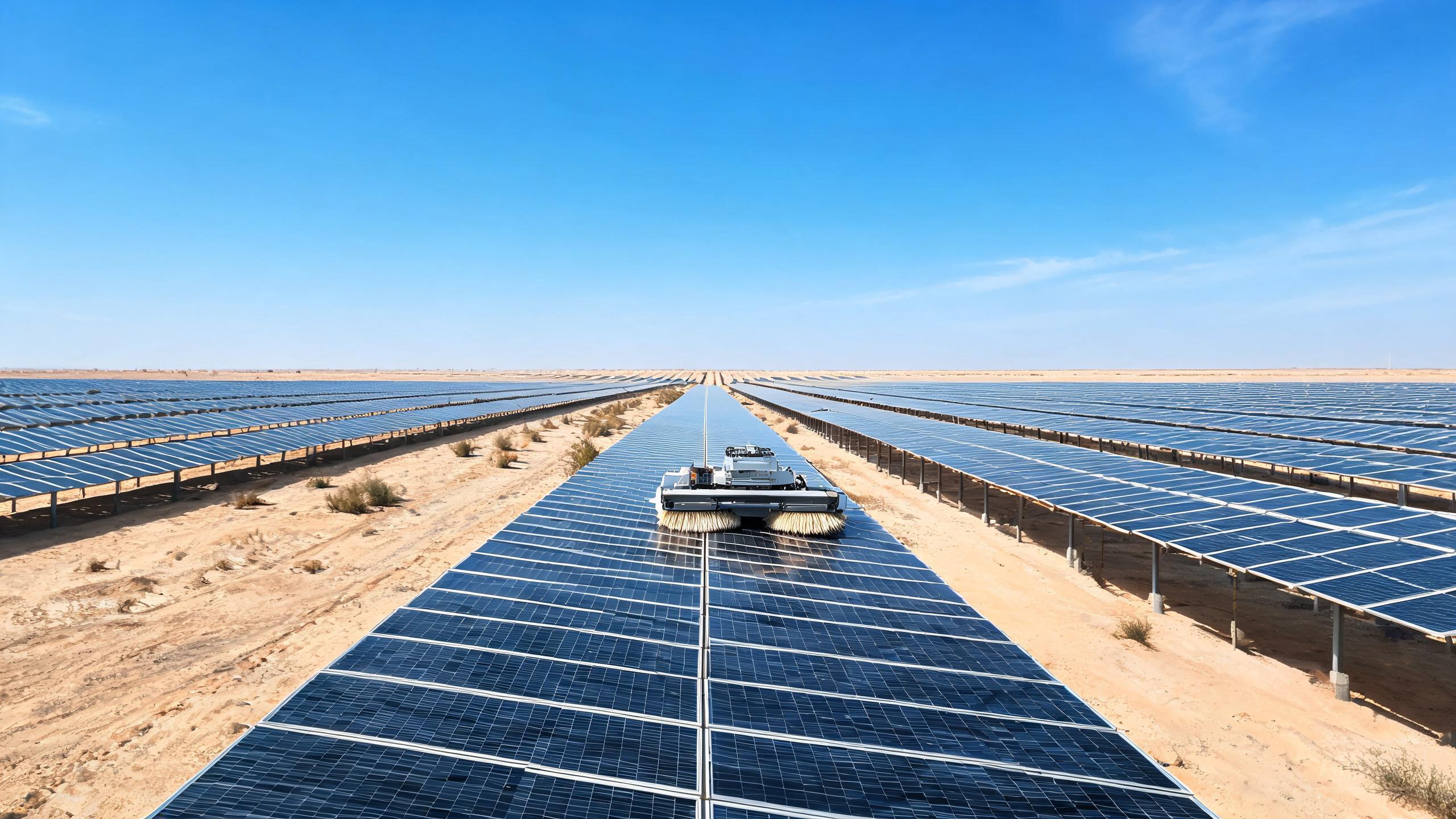
The SolarCleano F1 is a standout contender in the 2026 solar panel cleaning market, earning a 9.0 rating for its versatile wet/dry cleaning and remote-controlled operation. Designed for both rooftop and ground arrays, this utility scale PV cleaning robot allows a single operator to manage cleaning tasks safely from the array’s edge. Whether you’re weighing the solar panel cleaning robot cost or wondering if solar panel cleaning improves output, the F1 delivers practical answers. In this review, we break down its features, pros, cons, and real-world applicability.
Wet & Dry Cleaning: The Best of Both Worlds
The SolarCleano F1 supports both wet and dry cleaning methods, making it a flexible choice for various environmental conditions. In dusty, arid regions, dry brushing can be the preferred waterless solar panel cleaner, saving water and time. Conversely, wet cleaning is effective for stubborn grime or bird droppings. This dual capability is a key reason why it’s often cited as one of the best solar panel cleaning robot 2026 options. When comparing dry vs wet solar panel cleaning, the F1 lets you adapt to the situation: dry for routine maintenance, wet for deep cleans. This flexibility also helps operators optimize cleaning schedules based on output needs, as solar panel cleaning improves output by removing light-blocking debris.
Remote Control & Single-Operator Efficiency
The F1 is guided by remote control, eliminating the need for workers to walk on fragile panels. This is a major safety and efficiency advantage for utility scale PV cleaning robot deployments. A lone operator can stand at the array’s edge and maneuver the robot across roof or ground installations. This design reduces labor costs and minimizes the risk of panel damage. For large solar farms, this remote operation is crucial, as it allows quick cleaning cycles without extensive crew training. However, note that the operator must be present throughout the cleaning process, which is a limitation compared to autonomous robots. Still, for many installations, this manual oversight ensures thorough cleaning and immediate response to obstacles.
Cost & Scalability: Understanding the Investment
When evaluating solar panel cleaning robot cost, the SolarCleano F1 sits in a mid-to-high price band that varies with configuration. This variability means the price can scale with your installation size, making it accessible for small rooftop arrays and larger ground-mounted projects alike. For those seeking a waterless solar panel cleaner to minimize operational expenses, the dry mode reduces water bills and wastewater handling. While the initial investment might be higher than manual cleaning tools, the long-term savings in labor and water, coupled with increased energy yield, often justify the expense. Additionally, solar panel cleaning improves output by up to 20% in heavily soiled areas, making the F1 a cost-effective solution over time.
Pros, Cons & Suitability
Pros: The F1 excels with its wet/dry versatility, remote control, single-operator use, and compatibility with both roof and ground arrays. It’s a top pick for those searching for the best solar panel cleaning robot 2026 because it balances performance and safety. Cons: The range pricing can be confusing, and the need for an operator to be present means it’s not fully autonomous. For utility scale PV cleaning robot needs, the F1 is best suited for sites where water is available (for wet cleaning) or where dry cleaning is sufficient. In dry vs wet solar panel cleaning, the F1’s adaptability ensures you’re not locked into one method. Overall, if you prioritize control and flexibility over full automation, the F1 is an excellent investment.
Our verdict
The SolarCleano F1 stands out as a reliable, versatile cleaning robot that answers the key questions of cost, method, and output. Its remote-controlled wet/dry operation makes it a strong candidate for the best solar panel cleaning robot 2026, especially for operators who value safety and precision. While the solar panel cleaning robot cost may be a factor, the F1’s scalability and dual-mode cleaning provide long-term value. If you’re still debating whether solar panel cleaning improves output, the F1’s efficiency in removing dirt and grime will likely boost your system’s performance. For utility scale PV cleaning robot applications, the F1 is a practical, effective choice that bridges the gap between manual labor and full automation.