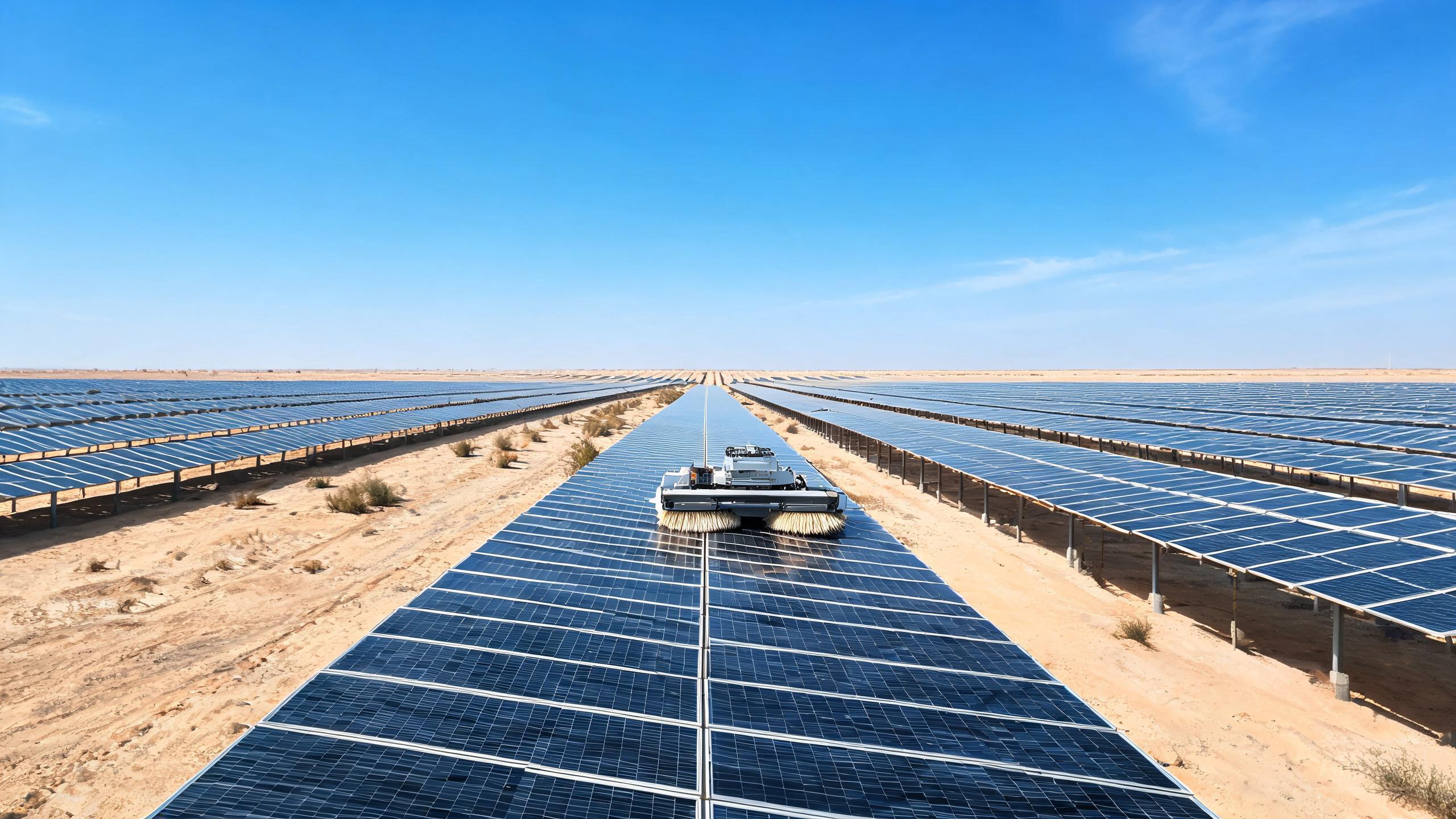
If you operate rooftop or ground-mounted solar, you have probably asked whether a robot can replace manual crews. The SolarCleano F1 is a remote-controlled machine that cleans both wet and dry, and it lets one person work from the edge of the array. This guide looks at the buying decision from the operator's point of view: who it fits, what it changes about daily cleaning, and how to judge the solar panel cleaning robot cost against the output you recover. It is not a spec sheet repeat; it is a practical checklist before you order.
Who the F1 Is Built For
The F1 is designed around single-operator use. Because it is remote controlled, one technician can guide it across rooftop or ground arrays without walking the rows. That matters on large commercial roofs where walking between rows is slow and risky, and on ground arrays where a utility scale PV cleaning robot fleet usually needs several operators per shift. With the F1, the same person can cover more area in a day, and the machine handles both wet and dry passes. If your site has a mix of panel tilts and layouts, the remote control lets the operator adjust on the fly rather than relying on pre-set routes. It is not an autonomous fleet robot; it is a tool that keeps a human in charge while removing the physical labor.
Dry vs Wet Solar Panel Cleaning: When Each Mode Pays Off
The F1 runs both modes, so the real question is when to use each. Dry cleaning is faster and needs no water supply, which suits dusty, dry regions and sites where water is expensive or unavailable. A waterless solar panel cleaner removes loose dust and keeps the robot light and quick. Wet cleaning adds water to lift stubborn soiling such as bird droppings, pollen film, or cement dust that dry brushing can smear. In practice, many operators use dry passes for routine maintenance and switch to wet for seasonal deep cleans. Because the F1 does both, you do not need two machines. The trade-off is that wet mode requires a water source or tank, which adds setup time. If your site has hard water, consider filtered supply to avoid mineral spotting.
Does Solar Panel Cleaning Improve Output, and How to Justify the Cost
Dust, pollen, and bird droppings block sunlight, and the loss shows up as lower current across the string. Does solar panel cleaning improve output? Yes, and the gain is largest in dusty or agricultural areas where soiling builds quickly. The F1's value comes from restoring that lost yield without hiring a large crew. To judge solar panel cleaning robot cost, compare it with your current cleaning spend: manual labor, water trucking, and safety equipment. Then estimate recovered energy by checking production before and after a test clean. For a utility scale PV cleaning robot deployment, even a small percentage recovery across many megawatts can pay back the machine in a season. Range pricing means configurations vary, so ask for a quote matched to your array size and whether you need wet capability.
Practical Setup and Operating Notes
Before buying, check roof access, panel row spacing, and whether the robot can be lifted safely to the array edge. The F1 is remote controlled, so the operator stays at the array boundary, which reduces fall risk on rooftops. Plan a water point if you intend to use wet mode regularly, and store the machine indoors to protect brushes and electronics. Train at least two people so one can cover for the other. Because the operator must be present, the F1 is best for scheduled cleaning blocks rather than unattended nightly cycles. For a mixed portfolio, one F1 can rotate between sites if transport is manageable. Finally, track cleaning dates and weather so you can prove the output gain over time.
Our verdict
The SolarCleano F1 is a strong fit if you want one remote-controlled machine that handles both dry and wet cleaning, and if you value keeping a single operator in control. It is the best solar panel cleaning robot 2026 candidate for rooftop and ground arrays where waterless solar panel cleaner speed and wet-mode deep cleaning both matter. Weigh the solar panel cleaning robot cost against recovered output, confirm your water access, and train your team. If you need unattended fleet autonomy, look elsewhere; if you want a practical, flexible tool that improves yield, the F1 deserves a shortlist spot.