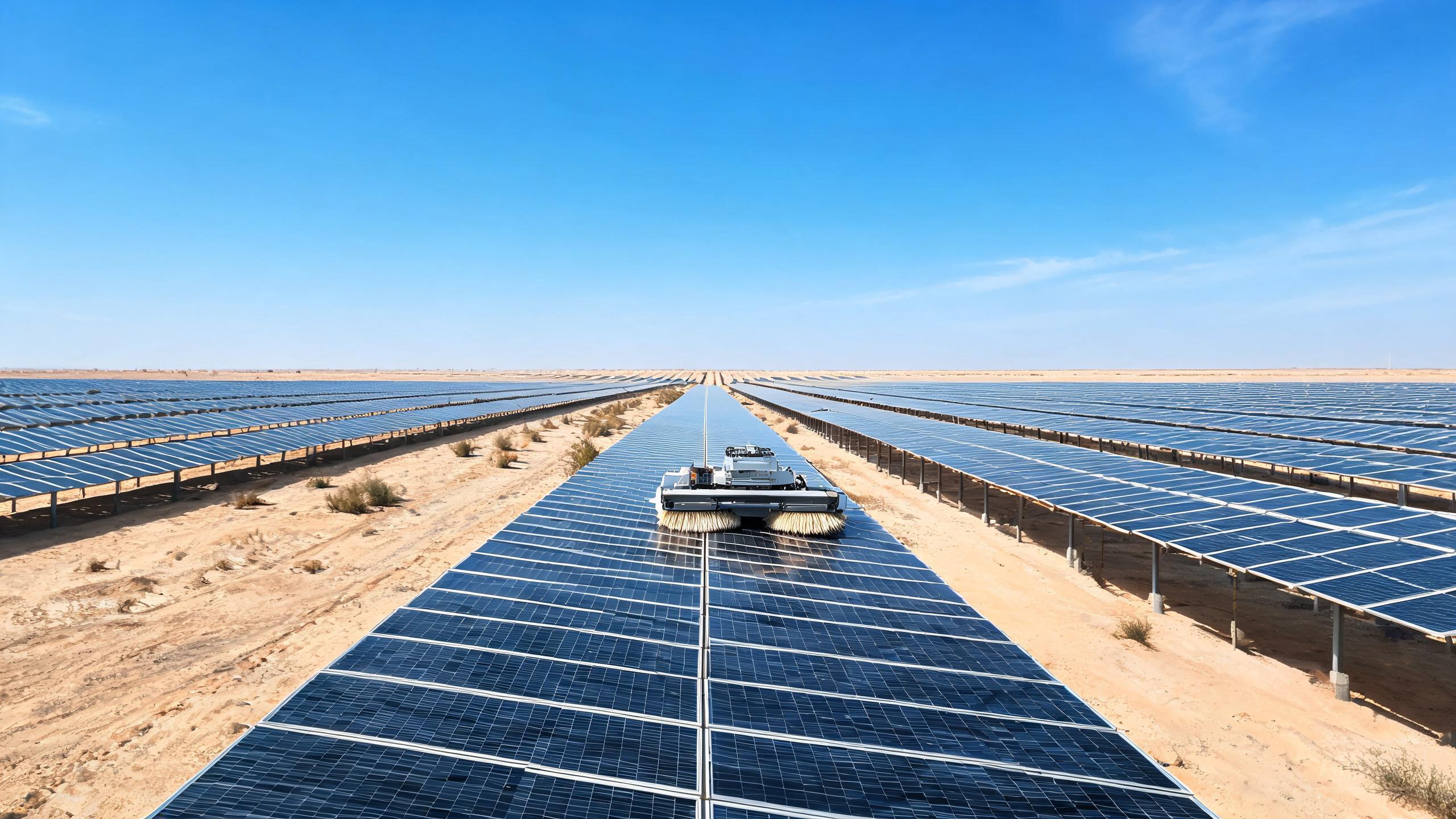
If you run an O&M business, you already know the awkward middle ground: hand crews are cheap but slow, and utility scale PV cleaning robot fleets are powerful but often locked into one cleaning method. The Neexgent NXR-IV sits right in that gap. It is a flexible wet/dry machine with remote or PLC-based control, aimed squarely at growing operations and maintenance teams. This guide walks through who should buy it, how to think about cost, and where it fits next to waterless options.
Who the NXR-IV Is Actually For
The NXR-IV is not a consumer gadget. Its target user is an O&M business, and the design choices reflect that. It supports both wet and dry cleaning, which means one machine can handle dusty dry climates and sticky, bird-dropping-heavy sites without buying two units. It runs with a single operator, and it accepts remote or PLC control, so integrators can tie it into automated lines rather than treating it as a standalone tool. If you are a small installer with a few rooftops, this may be more machine than you need. If you are scaling a service business and want a robot that grows with your contracts, the NXR-IV is priced in the mid-range band, which the verdict calls a sensible pick for growing O&M businesses.
Dry vs Wet Solar Panel Cleaning: Why the Choice Matters
The dry vs wet solar panel cleaning debate is not academic. Dry cleaning wins on water logistics, especially in arid regions where hauling water to a site costs more than the cleaning itself. Wet cleaning wins on stubborn soiling, because water plus agitation lifts baked-on grime that a dry brush can leave behind. The NXR-IV sidesteps the argument by doing both. That flexibility matters because soiling is seasonal and site-specific: a waterless solar panel cleaner may be perfect in one month and insufficient the next. For O&M teams, owning one machine that adapts is often cheaper than owning two specialized units, and it simplifies training and spare parts. The trade-off is that PLC setup needs know-how, so budget for a technician who understands control integration.
Understanding Solar Panel Cleaning Robot Cost
Solar panel cleaning robot cost is rarely a single number, and the NXR-IV is no exception: its price is configuration-dependent. The base machine, the control package, and how deeply you integrate PLC automation all move the final figure. When you build a budget, do not compare sticker prices alone. Compare cost per cleaned panel per year, factoring in labor saved, water saved if you run dry, and downtime avoided. The NXR-IV's mid-range positioning means it undercuts premium utility scale PV cleaning robot platforms while still offering automation hooks those cheap units lack. For a growing O&M business, that middle ground is often the sweet spot: enough capability to win larger contracts, without the capital outlay of a full utility-scale fleet.
Does Solar Panel Cleaning Improve Output? The ROI Question
The question every buyer asks is simple: does solar panel cleaning improve output? Yes, but the size of the gain depends on your site. Heavy soiling, pollen seasons, and dust storms create measurable losses that cleaning recovers; clean sites see less benefit. That is why the NXR-IV's dual-mode design is an ROI tool, not just a feature. On a dusty site you run dry and clean frequently at low cost per pass. After a long dry spell or a bird-heavy week, you switch to wet mode for a deeper clean. Because one operator can run it and PLC integration allows scheduled cycles, you can clean more often, and more frequent light cleaning usually beats rare deep cleaning for energy yield. Run the math against your own soiling rate before buying, but for most O&M businesses the payback case is credible.
Our verdict
The Neexgent NXR-IV is not trying to be the biggest or the cheapest solar cleaning robot. It is a deliberately flexible mid-range machine for O&M businesses that want wet/dry capability, single-operator simplicity, and PLC integration without utility-scale capital. If your sites vary in soiling and you value adaptability, it deserves a serious look in 2026. Just budget for the configuration you actually need, and plan for the PLC know-how.