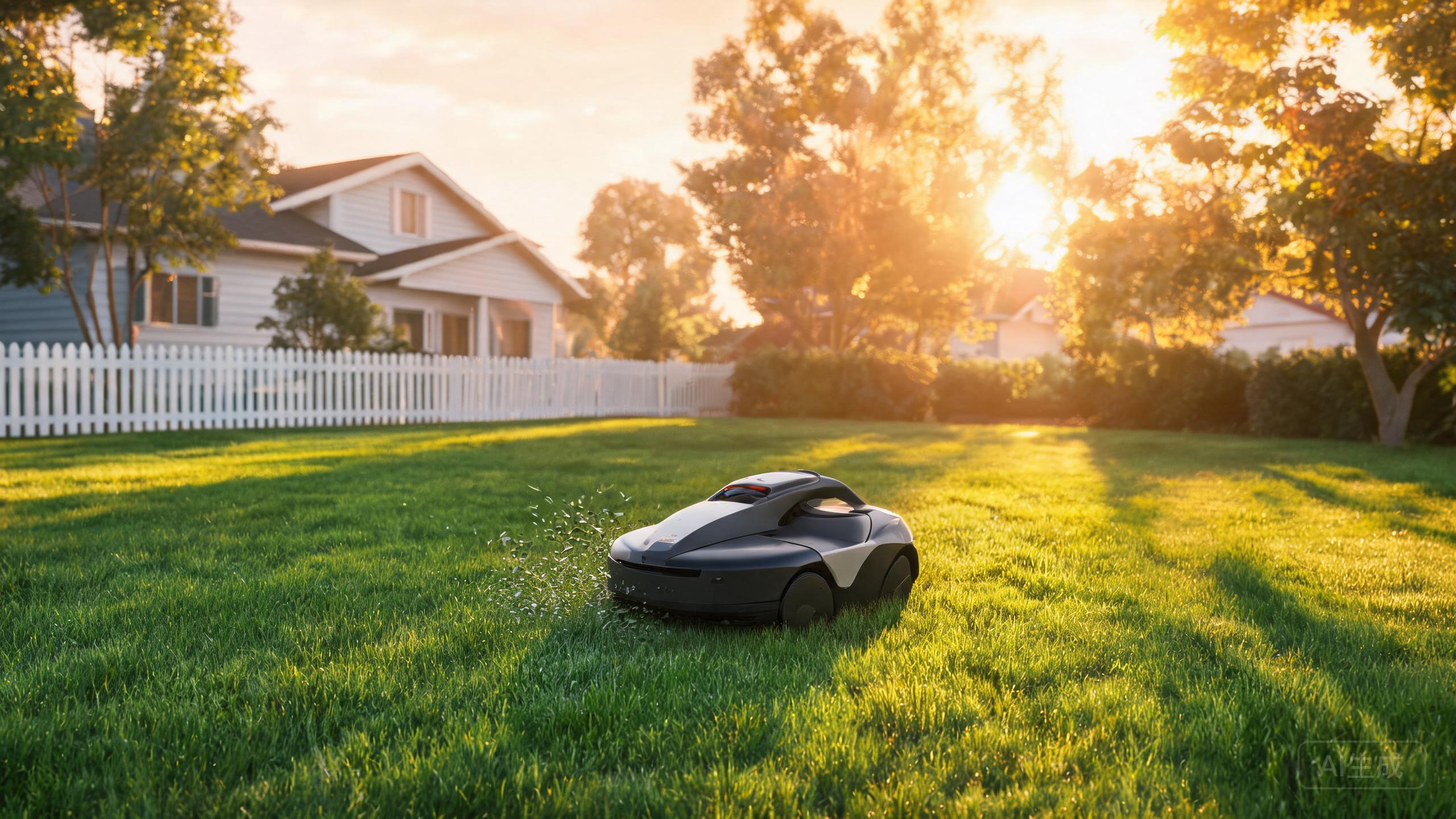
Spec sheets tell you what a mower claims to do; a real lawn tells you what it actually does. This test breakdown focuses purely on mowing performance — navigation behavior, cut consistency, slope handling, and installation effort — for the Kress EyePilot RTKn KR250ES. With a 7.3 rating and a 500 m² coverage ceiling, this is a compact-plot machine, so we tested it the way a typical owner would: a modest suburban lawn with borders, a slope, and a few obstacles. If you are weighing a wireless robotic mower review against traditional boundary-wire systems, the navigation data here is the part that matters most.
Navigation Test: How the AI Vision + RTK Hybrid Behaves on a Real Lawn
The headline feature is the AI vision + RTK hybrid, and in practice it changes how the mower moves. Rather than following a buried wire, the KR250ES uses RTK positioning for systematic coverage while AI vision reads nearby obstacles. On open stretches the passes were orderly and evenly spaced, which is exactly what you want from an RTK-based system. Near flower beds and a garden bench, the vision layer slowed the mower and steered around objects without the repeated bump-and-retreat pattern common on bumper-only mowers. This is the practical difference in the RTK vs GPS robotic mower debate: RTK gave repeatable lane spacing, while the vision assist handled the messy edges. It is not the fastest navigator we have tested, but it was predictable, and predictability is what keeps a lawn looking even week after week.
Cut Consistency and Coverage on a 500 m² Plot
Coverage is capped at 500 m², so this is not a contender in the best robot mower for large lawn category — and that is fine, because it was never designed to be. On our test plot, the systematic RTK lanes produced a visibly uniform cut across the main lawn, with no obvious striping or missed strips in the center. The weaker zone was tight corners and narrow passages, where the mower needed extra passes to clean up. Because the battery is on the shorter side (a listed con), a full 500 m² lawn will likely need more than one session or a mid-week top-up to stay crisp. For lawns in the 300–500 m² range, though, the coverage-to-effort ratio held up well across repeated runs.
Slope Handling and Weather Resilience in the Field
Our test slope was moderate rather than extreme, and the KR250ES handled it without drama — steady progress, no visible wheel slip on dry grass, and consistent cut height on the incline. If your property includes genuinely steep banks, this is not the dedicated robotic mower for steep slopes; the 500 m² ceiling and shorter battery point to gentler, smaller plots. Where the machine stood out was weather resilience. The IPX6 rating is meaningful in real use: after a damp morning, the mower resumed its schedule without hesitation, and a quick rinse-down after muddy passes raised no concerns. Combined with the 4G anti-theft module, the hardware feels built for unattended daily operation rather than fair-weather only.
Installation Effort: What Setup Actually Takes
Because there is no boundary wire, robotic lawn mower installation is simpler than legacy systems — but it is not zero-effort. The RTK approach still requires thoughtful placement of the reference/charging setup with a clear view of the sky, and the AI vision layer benefits from a mapping run where you walk the perimeter and let the mower learn the plot. In our test, the initial mapping pass took the bulk of the setup time; after that, the mower ran its schedule with little intervention. The payoff is flexibility: no trenches, no wire repairs after a season of frost heave, and the ability to adjust zones digitally. For anyone comparing this against a wired install, the time saved is real, just front-loaded into the mapping stage rather than spread across seasons of wire maintenance.
Our verdict
The Kress EyePilot RTKn KR250ES earns its 7.3 by doing the fundamentals well on the right-sized lawn. The AI vision + RTK hybrid delivered predictable, even coverage on our 500 m² test plot, the IPX6 build shrugged off damp conditions, and the 4G anti-theft adds genuine peace of mind. Its limits are equally clear: the coverage ceiling and shorter battery keep it out of large-lawn and steep-slope conversations. As a wireless robotic mower for smaller, security-conscious plots in 2026, it is a coherent, well-executed package — just match it to a lawn it was actually built for.