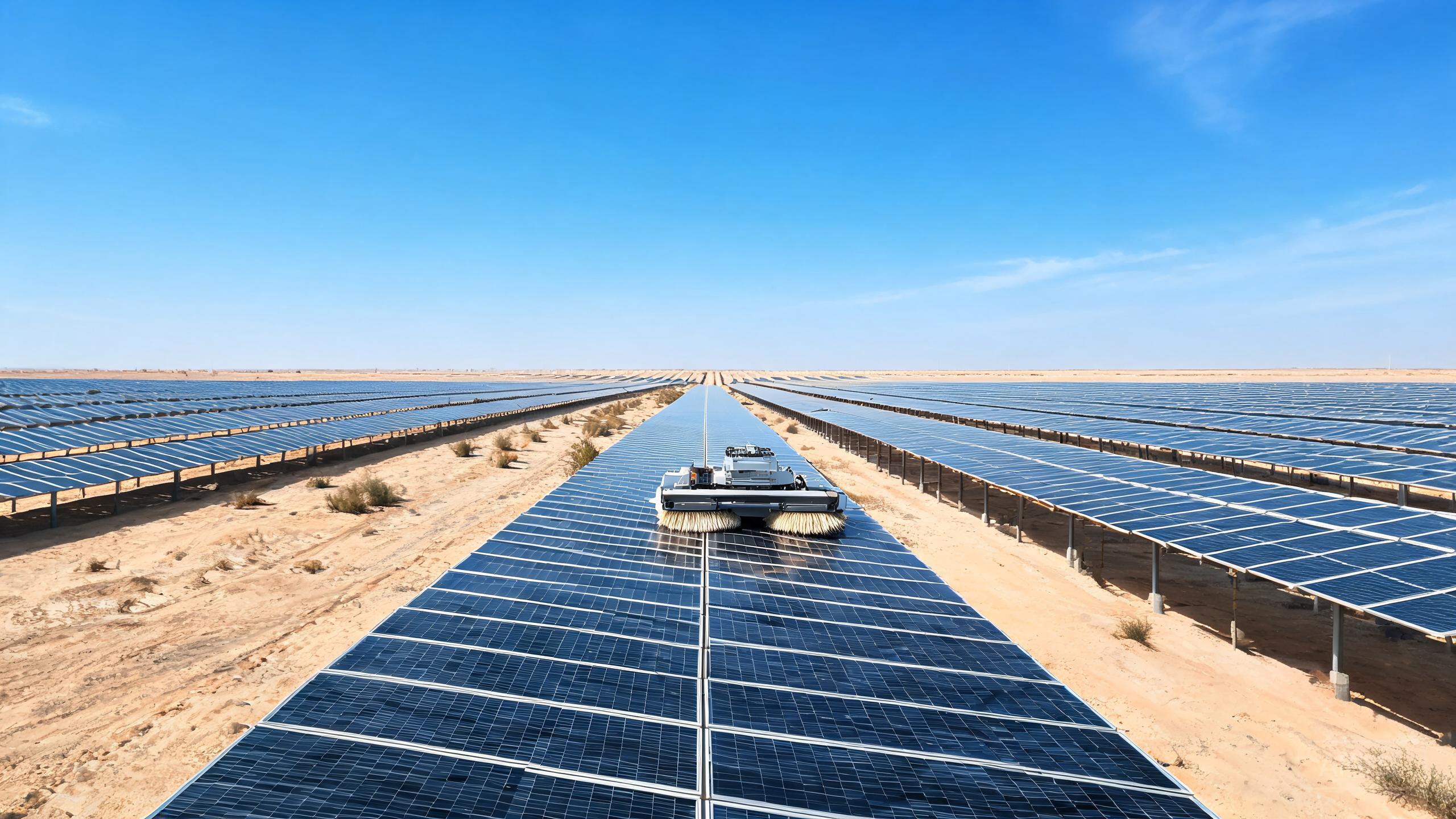
Choosing between the IFBOT X3 and the TEAMANTS TAR01 is really a question of cleaning method and compliance priorities. Both are semi-autonomous machines aimed at solar panel maintenance, but they take different paths to the same goal. In this head-to-head, we compare the two honestly across performance, features, value and ideal users so you can decide which belongs in your fleet for 2026.
Performance: Dry vs Wet Solar Panel Cleaning
The IFBOT X3 is a dry-only machine, which is the core of its identity. It uses a dry brush and is engineered for rooftops and steep slopes where dust accumulation is the main enemy. That makes it a strong waterless solar panel cleaner for crews that cannot manage water runoff on a roof. The TEAMANTS TAR01 relies on a CE-certified brushing system and is semi-autonomous as well, but it is noted as slower on steep terrain. If your sites are pitched roofs with heavy dust, the X3 has the edge; if you need a straightforward brushing platform on flatter, compliance-sensitive projects, the TAR01 holds its own. Neither is a utility scale PV cleaning robot, so neither is the right tool for massive ground-mount farms.
Features and Design Differences
Feature-wise, the X3 leans into rooftop practicality: dry-only operation with no water runoff, steep-slope handling, semi-autonomous control and a rooftop-focused design. Its trade-offs are a dry-only limitation that struggles with heavy soiling and a narrow per-pass width. The TAR01 counters with a CE-certified brush system, EU-compliant positioning and a straightforward design that is easy to understand and deploy. Its downsides are contact-only pricing and slower performance on steep terrain. In short, the X3 is built around the roof, while the TAR01 is built around certification and simplicity.
Value and Solar Panel Cleaning Robot Cost
Value is where the two diverge most. The IFBOT X3 earns an 8.8 rating, reflecting a mature, purpose-built dry cleaning package that residential and C&I rooftop crews trust. The TEAMANTS TAR01 sits at 7.2, and its pricing is contact-only, so you must request a quote. That makes direct solar panel cleaning robot cost comparison difficult. For EU buyers, however, the CE certification can justify the effort, since compliance paperwork matters as much as performance. If budget certainty and proven rooftop performance top your list, the X3 is the safer value bet; if certification is non-negotiable, the TAR01's quote may be worth pursuing.
Who Each One Suits Best
The IFBOT X3 suits residential and C&I rooftop crews chasing reliable dry cleaning on steep slopes, especially where water use is impractical. The TEAMANTS TAR01 suits EU-based buyers and projects where CE compliance and a simple brushing design outweigh raw speed on inclines. Both help answer does solar panel cleaning improve output: regular removal of dust and soiling keeps panels closer to peak performance, and choosing the right method for your site is the key. For most rooftop-focused buyers in 2026, the X3 is the more complete package.
Our verdict
Verdict: choose the IFBOT X3. Its higher 8.8 rating, dry-only rooftop focus, steep-slope capability and no-water-runoff design make it the better all-round pick for residential and C&I solar maintenance. Pick the TEAMANTS TAR01 only if CE certification and EU compliance are decisive for your project and you accept contact-only pricing and slower steep-terrain work.