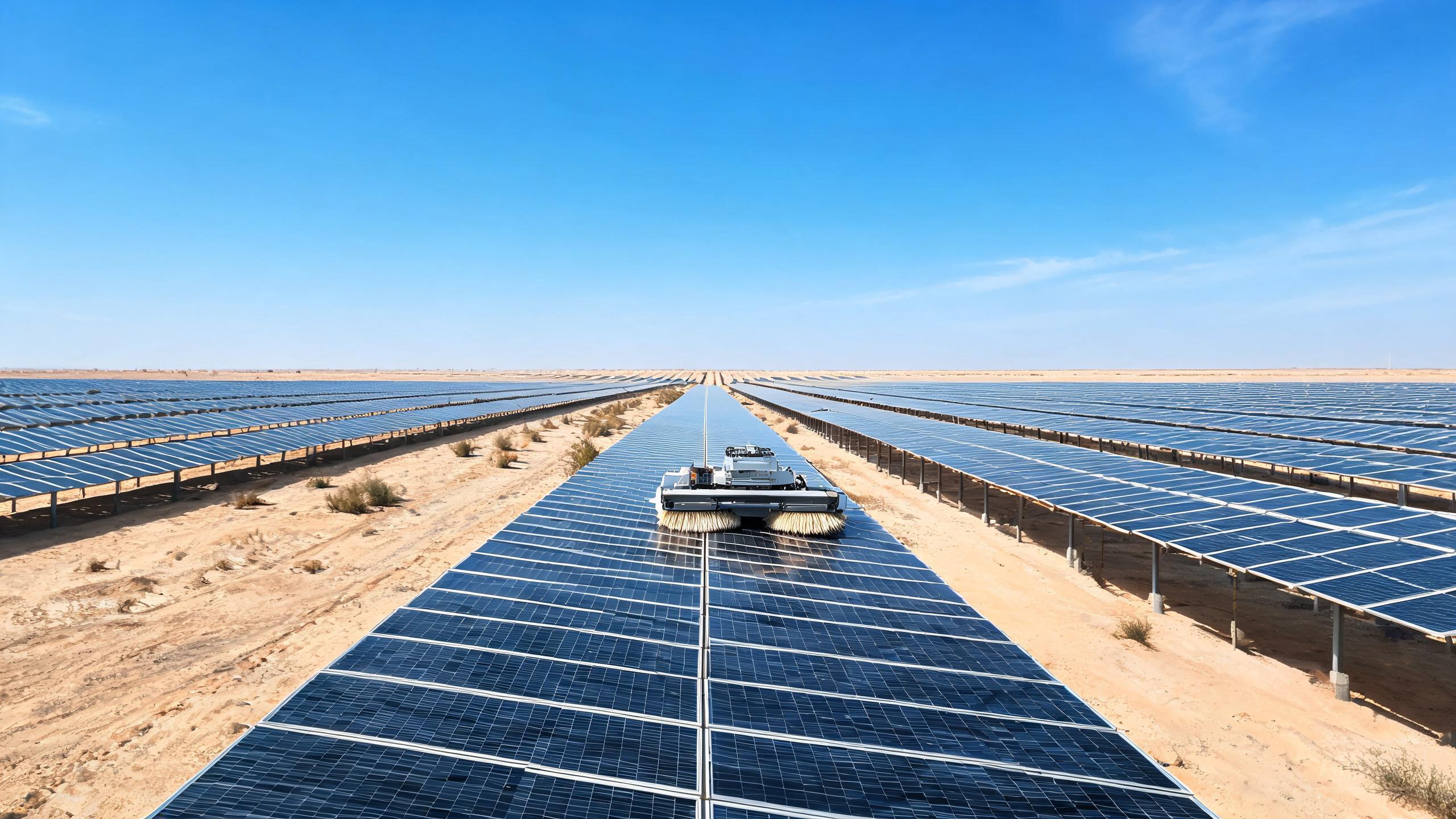
IFBOT has refreshed its messaging around the X3, the semi-autonomous, dry-only robot that the company positions for rooftops and steep slopes where dust is the primary enemy. Rather than revisiting our earlier hands-on review, this update looks at the X3 from a buyer's perspective: where a waterless solar panel cleaner fits into modern O&M budgets, how it compares with wet-cleaning alternatives, and why rooftop crews chasing the best solar panel cleaning robot 2026 shortlist keep coming back to dry brush designs.
Where the X3 Fits in the 2026 Rooftop Cleaning Lineup
IFBOT continues to market the X3 as a rooftop-first machine: semi-autonomous operation, a dry brush cleaning tool, and a chassis tuned for steep slopes. That combination is deliberate. On residential and C&I rooftops, water access is often the bottleneck — hauling it up, managing runoff, and protecting roof membranes all add cost and risk. By staying dry-only, the X3 sidesteps those issues entirely, which is why it keeps appearing on shortlists for the best solar panel cleaning robot 2026 in rooftop categories. It is not a utility-scale workhorse; it is a targeted tool for crews that need reliable dust removal on sloped arrays without dragging a hose behind them.
Dry vs Wet Solar Panel Cleaning: The Cost Math Buyers Are Running
The dry vs wet solar panel cleaning debate usually comes down to total cost of ownership. Wet cleaning can be effective against heavy soiling, but it requires water sourcing, runoff management, and often more labor per pass. A waterless solar panel cleaner like the X3 trades that complexity for a narrower per-pass width — a real tradeoff the company acknowledges. For buyers modeling solar panel cleaning robot cost, the question is whether reduced water logistics and lower risk on steep rooftops outweigh the extra passes. On dusty, dry climates where dust accumulation is the main enemy, that math often favors dry.
Does Solar Panel Cleaning Improve Output? What the X3 Angle Adds
The question does solar panel cleaning improve output is settled in principle: accumulated dust reduces irradiance reaching the cells, and removing it restores generation. What the X3 adds to that conversation is frequency. Because it is semi-autonomous and dry-only, it can be deployed more often without the setup overhead of a wet crew — meaning arrays stay closer to their clean-state baseline between deeper cleanings. For rooftop owners who cannot justify frequent wet washes, a dry brush robot can make routine dust management practical rather than occasional.
Who Should Consider the X3 — and Who Should Not
IFBOT is clear about the X3's limits: dry only, so heavy soiling is out of scope, and a narrow per-pass width that slows coverage on very large arrays. That makes it a poor fit for utility scale PV cleaning robot deployments, where wide-pass wet or hybrid machines usually dominate. It is a strong fit, however, for residential and C&I rooftop crews working steep slopes in dusty regions — exactly the profile the company targets with its rooftop-focused design. Buyers weighing a utility-scale fleet should look elsewhere; buyers chasing dependable dry cleaning on sloped rooftops should keep the X3 on the list.
Our verdict
IFBOT's X3 update reinforces a simple positioning: a waterless solar panel cleaner built for rooftops and steep slopes, not for every PV site. In the best solar panel cleaning robot 2026 conversation, it earns its place by solving a specific problem — dust on sloped rooftops without water logistics — rather than by trying to be everything. Buyers should weigh solar panel cleaning robot cost against deployment frequency, and remember that dry vs wet solar panel cleaning is a fit question, not a winner-takes-all one.