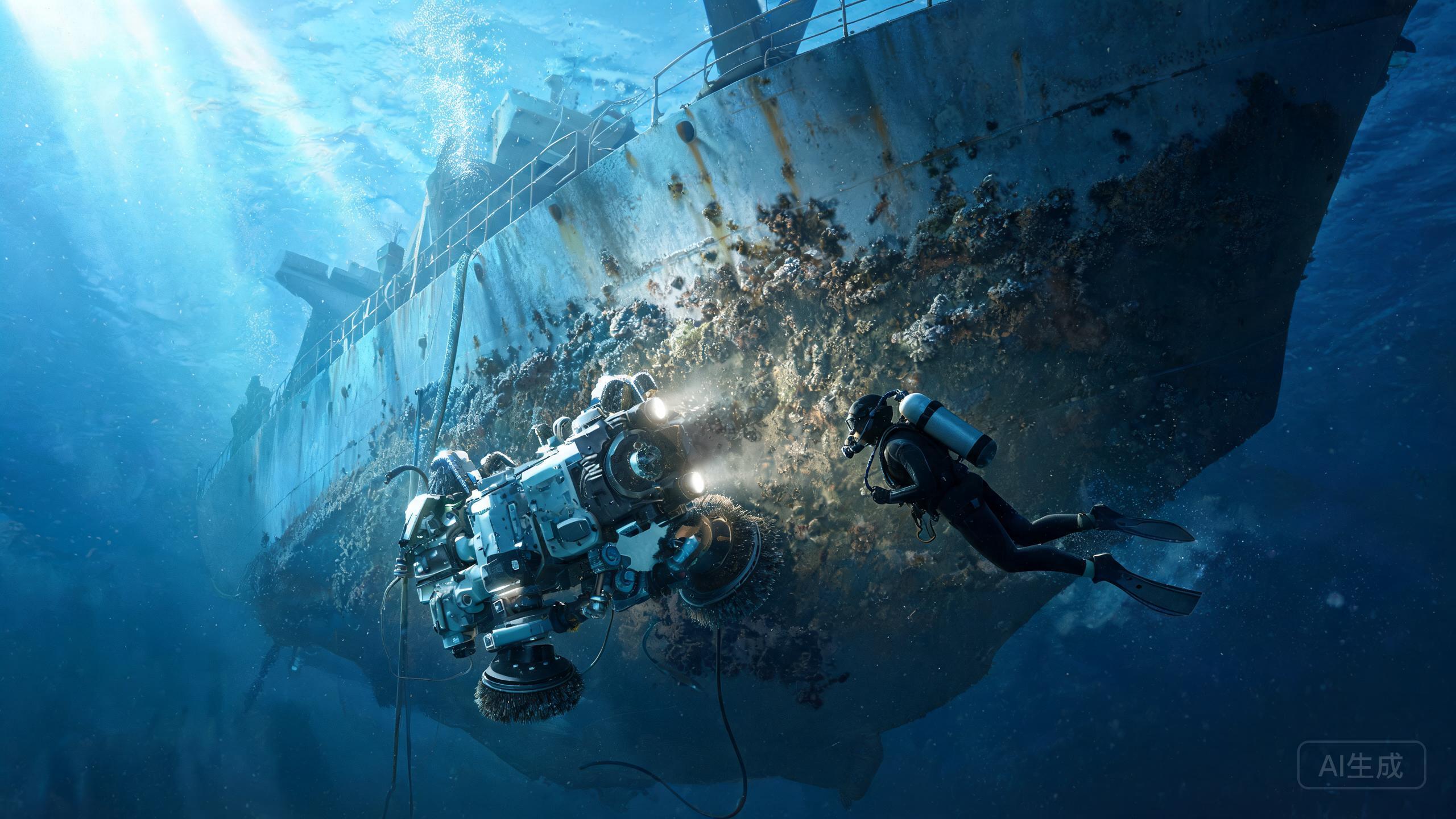
If you manage a fleet or a port service company, the question is no longer whether robots can clean hulls, but which platform fits your berthing pattern, depth limits and compliance rules. The HullWiper ROV is one of the earliest commercial diver-free systems, and in 2026 it remains a reference point for high-pressure cleaning down to 40 m. This guide looks at it from a buyer's perspective: when the underwater hull cleaning robot 2026 generation makes sense, how to weigh ROV hull cleaner vs diver economics, and what to check before signing a service or purchase contract.
What the HullWiper ROV Actually Does
The HullWiper ROV is a diver-free remotely operated vehicle that cleans with a high-pressure water jet and works to a maximum depth of 40 m. Its defining feature is debris handling: removed fouling is captured and filtered rather than released into the water column, which matters in ports with strict discharge rules. It is not a magnetic hull crawling robot that grips the steel and drives itself along the plate; it is an ROV-based service platform, so the cleaning head is positioned by an operator. That distinction shapes everything about where it fits. Because the platform is dated and best suited to port operations, buyers should treat it as a proven, compliance-friendly workhorse rather than a cutting-edge autonomous unit. For a ship hull cleaning drone review, the honest framing is: strong on containment and depth, less flexible outside sheltered water.
ROV Hull Cleaner vs Diver: The Cost Question Buyers Keep Asking
Divers remain capable and sometimes cheaper for one-off, shallow or highly irregular jobs. The ROV case strengthens when you need repeatable coverage, documented debris capture, and no diver downtime risk. Diver operations carry weather windows, safety standbys and insurance loadings that rarely appear in a simple day rate. When you model biofouling cleaning robot cost, include the full cycle: mobilization, dive team, containment equipment, waste disposal and the fuel penalty of leaving fouling on the hull. That last item is where the business case usually turns. Independent studies consistently show that heavy slime and calcareous fouling raise propulsive power demand by double-digit percentages. If a cleaning pass restores a smooth hull, the hull cleaning fuel savings can repay the service within a few months on a vessel burning significant bunker fuel. The ROV's captured-debris design also reduces the risk of a port authority fine or a rejected cleaning operation, which is a real cost line for operators in regulated harbours.
Where It Fits and Where It Doesn't
Buy or contract this platform when your vessels berth regularly in ports, when depth stays within 40 m, and when discharge rules make containment non-negotiable. It suits scheduled preventive cleaning programmes better than emergency response, because mobilization is planned rather than ad hoc. It is a weaker fit for deep-sea or offshore inspection work, for very large areas where autonomy would cut labour hours, and for operators who need the tight manoeuvrability of a magnetic hull crawling robot around complex appendages. If your fleet trades mostly in open water and rarely sits alongside, the economics of a port-based ROV service are harder to justify. A practical test: count how many of your cleaning events in the last 24 months happened in a sheltered berth within 40 m depth. If that number is high, the platform's constraints are unlikely to bite.
Procurement Checklist Before You Commit
First, confirm the service provider's debris capture and disposal documentation, since that is the platform's main compliance advantage. Second, verify depth and hull-type suitability for each vessel class in your fleet, remembering the 40 m ceiling. Third, ask for before-and-after hull performance data, not just photos, so you can estimate hull cleaning fuel savings credibly. Fourth, clarify whether the platform is dated in ways that affect spare parts or operating software support, because a long-term contract on an ageing platform carries support risk. Fifth, compare the total cost of an ROV programme against a diver programme over 24 months, including standby, waste handling and potential fines. Finally, check whether the provider can integrate results into your hull performance monitoring system. A cleaning event that cannot be tied to a fuel or speed metric is hard to defend at budget time.
Our verdict
The HullWiper ROV is not the newest or most autonomous option in the 2026 market, and it is not a magnetic hull crawling robot. What it offers is a mature, diver-free, 40 m-capable high-pressure cleaning platform with debris capture that aligns well with port compliance regimes. Buy it, or contract it, when your cleaning happens in ports, when containment matters, and when you can measure the fuel penalty of fouling. Skip it if your work is deep, offshore or dominated by complex hull geometry. Used within those boundaries, it remains a defensible choice for fleet and port operators.