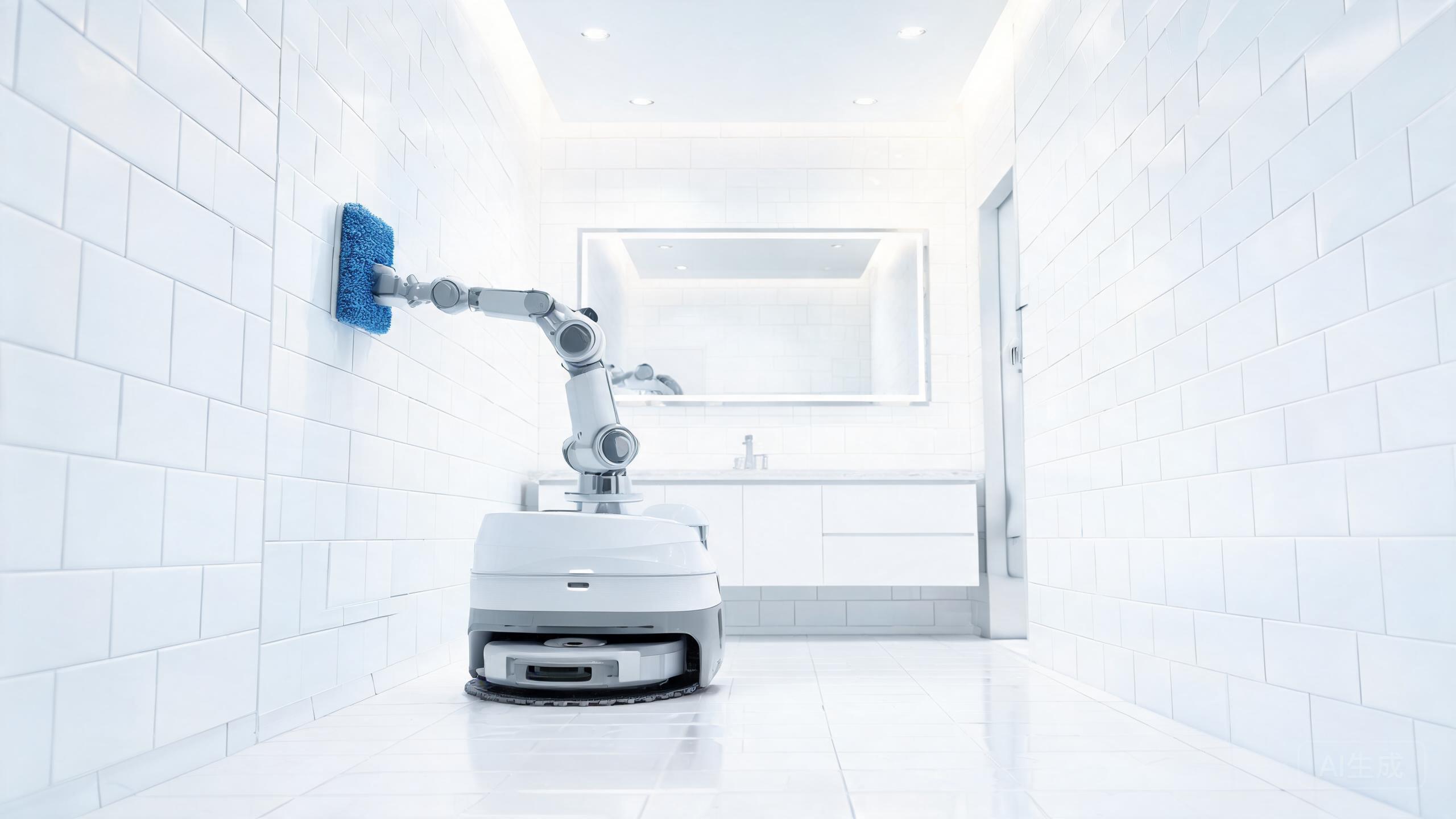
Most coverage of the HiveBotics Abluo M1 focuses on whether a first-generation machine is still worth buying. This update takes a different angle: the Abluo M1 as a milestone. It was HiveBotics' first autonomous toilet cleaning robot, and its real significance lies in what it proved. Before the Abluo M1, unattended restroom upkeep was mostly a pitch-deck promise. After it, commercial restroom cleaning automation had a working reference point. That makes the Abluo M1 less a product to debate and more a chapter in how the restroom cleaning robot 2026 market came to exist.
From Concept to Proof: What the Abluo M1 Actually Delivered
The Abluo M1's headline achievement is simple to state and hard to execute: it was an autonomous toilet cleaning robot that worked without a human standing over it. HiveBotics built it as a 1st-generation machine whose core task was toilet cleaning, in autonomous mode, under the HiveBotics name. That combination is why the Abluo M1 earned a proof-of-concept reputation. It did not need to be perfect. It needed to show that a robotic arm restroom cleaner could be trusted with a defined, repetitive job in a real restroom environment. For operators evaluating commercial restroom cleaning automation, the Abluo M1 is the origin story: the point at which the category stopped being theoretical.
Why the Abluo M1 Still Matters in the 2026 Restroom Robot Conversation
The restroom cleaning robot 2026 landscape is more crowded and more capable than the one the Abluo M1 entered. That is precisely why the first-gen machine remains relevant. Its documented strengths were proof of concept delivered, autonomous toilet cleaning, and laying the groundwork for the Mark 2. Its documented limits were first-gen limitations and a narrower task scope. Read together, those pros and cons describe a classic v1: it validated the hard part and left the polish for the next generation. The Abluo M1's narrower scope is not a failure so much as a boundary. It cleaned toilets autonomously and stopped there, which is exactly what a first-generation platform should do before expanding.
The Mark 2 Connection: Reading the Abluo M1 as a Baseline
HiveBotics' own framing is that the Abluo M1 laid the groundwork for the Mark 2's broader coverage and refinement. That sentence is the most useful lens for anyone doing a bathroom cleaning robot review of the first-gen unit today. The Abluo M1 is not the endpoint of commercial restroom cleaning automation; it is the baseline against which later coverage and refinement can be measured. For facility teams, this reframes the buying question. Instead of asking whether the Abluo M1 matches a 2026 flagship, ask what it established: autonomous toilet cleaning as a deliverable, not a demo. Everything the Mark 2 added sits on top of that foundation.
Budgeting Reality: Where the Abluo M1 Fits in Restroom Robot Cost Planning
Any serious look at restroom robot cost has to account for generation. The Abluo M1 is a 1st-gen, single-task autonomous platform from HiveBotics, and that profile shapes how it should be valued. It is not a like-for-like competitor to broader, later-generation systems; it is the entry point that made them possible. For buyers, that means the Abluo M1 belongs in conversations about piloting, proof-of-concept deployment, and legacy fleet planning rather than head-to-head spec comparisons. Its rating of 8.0 reflects a machine that did its job as a first-generation autonomous toilet cleaning robot and handed off the next chapter. Judged on that basis, the Abluo M1's value is historical, practical, and still legible in 2026.
Our verdict
The HiveBotics Abluo M1 does not need a revisionist defense. It needs correct placement. As the first autonomous toilet cleaning robot from HiveBotics, it delivered proof of concept, proved unattended restroom upkeep was viable, and set the baseline the Mark 2 built upon. In the broader story of commercial restroom cleaning automation, that is a meaningful role. The Abluo M1 is the first-gen machine that made the rest of the category's 2026 ambitions legible.