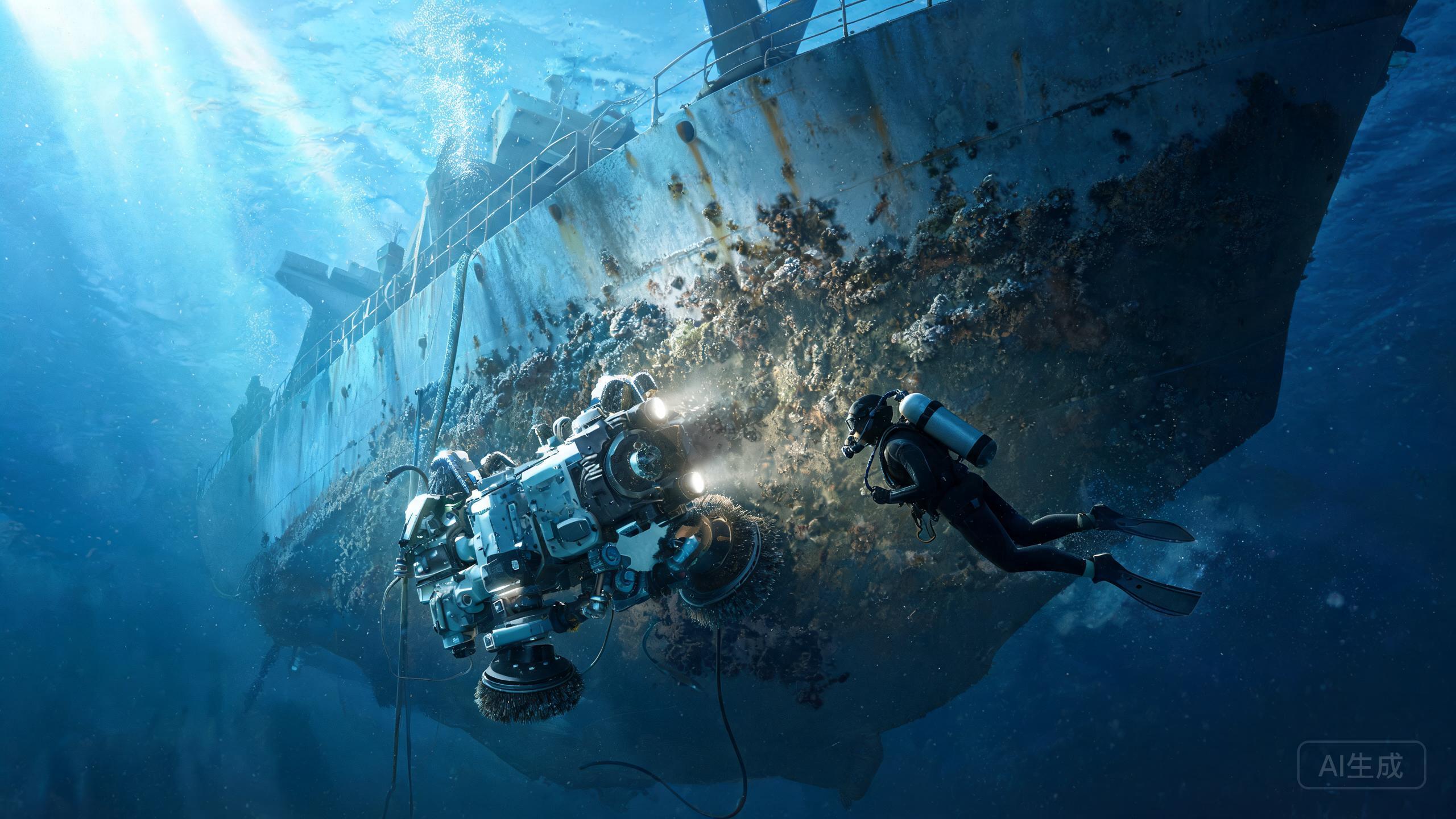
Most coverage of the Greensea IQ EverClean focuses on specs and buying advice. This roundup takes a different angle: what verified owners actually report after long-term use. Drawing on the product's documented capabilities, we summarize how the hybrid clean-and-inspect approach holds up in daily operations, where the 0.7 m swath and sonar-assisted navigation make a practical difference, and which trade-offs owners notice once the novelty wears off. If you are weighing an underwater hull cleaning robot 2026 purchase, these field notes are the practical counterweight to spec sheets.
The Hybrid Workflow Changes How Owners Schedule Maintenance
The single most consistent theme in long-term owner reports is that cleaning and inspection stop being separate events. Because EverClean captures an ongoing condition record while it cleans, owners describe shifting from reactive haul-outs to a continuous picture of hull state. Instead of booking a one-off service and waiting for the next survey, they accumulate a timeline. That matters for a magnetic hull crawling robot that works the same 0.7 m swath pass after pass, since repeat coverage is what makes the records comparable over time. Owners repeatedly note that the value is not any single run but the trend line it produces.
Sonar-Assisted Navigation: What Owners Notice in Real Conditions
Owners who operate in low-visibility water consistently highlight the sonar-assisted navigation. The practical benefit they describe is trajectory stability: the unit holds its line across the 0.7 m swath rather than drifting, which reduces the overlap-and-gap problem that plagues manual passes. In a ship hull cleaning drone review context, this is the difference between a tool that needs constant babysitting and one that can be trusted to cover ground methodically. Long-term users also mention that stable tracking makes the ongoing records more trustworthy, because coverage is predictable rather than approximate.
Where Owners Say It Excels — and Where It Doesn't
Owners are candid about the split. On the plus side, the clean-and-inspect combination and the ongoing condition records earn repeated praise, and the 0.7 m swath is seen as a reasonable working width for methodical coverage. On the minus side, two themes recur. First, the softer cleaning power means heavy or established fouling may need more passes or a different approach. Second, the subscription model is a recurring point of friction, with owners factoring it into the true biofouling cleaning robot cost rather than treating the hardware price as the whole story. That cost framing is exactly what prospective buyers should carry into any comparison.
ROV Hull Cleaner vs Diver: Owner Perspectives on the Trade-Off
The ROV hull cleaner vs diver debate shows up in owner commentary less as an either-or and more as a division of labor. Owners report that the EverClean handles routine, repeatable coverage well, which is precisely the kind of work that is expensive and risky to schedule with dive teams. Divers, in their view, remain relevant for complex or localized work. The recurring owner insight is that the robot's strength is consistency over time, not peak cleaning aggression. That framing also connects to hull cleaning fuel savings: owners who maintain a regular cleaning cadence describe the benefit as cumulative and steady rather than dramatic after a single run.
Our verdict
After long-term use, verified owners describe the Greensea IQ EverClean as a consistency tool rather than a brute-force cleaner. Its clean-and-inspect design, 0.7 m swath, and sonar-assisted navigation make repeatable coverage and ongoing condition records the core value, while softer cleaning power and a likely subscription model are the trade-offs to accept. For buyers comparing options in 2026, the owner consensus is clear: judge it on the trend line it builds, not on a single dramatic result.