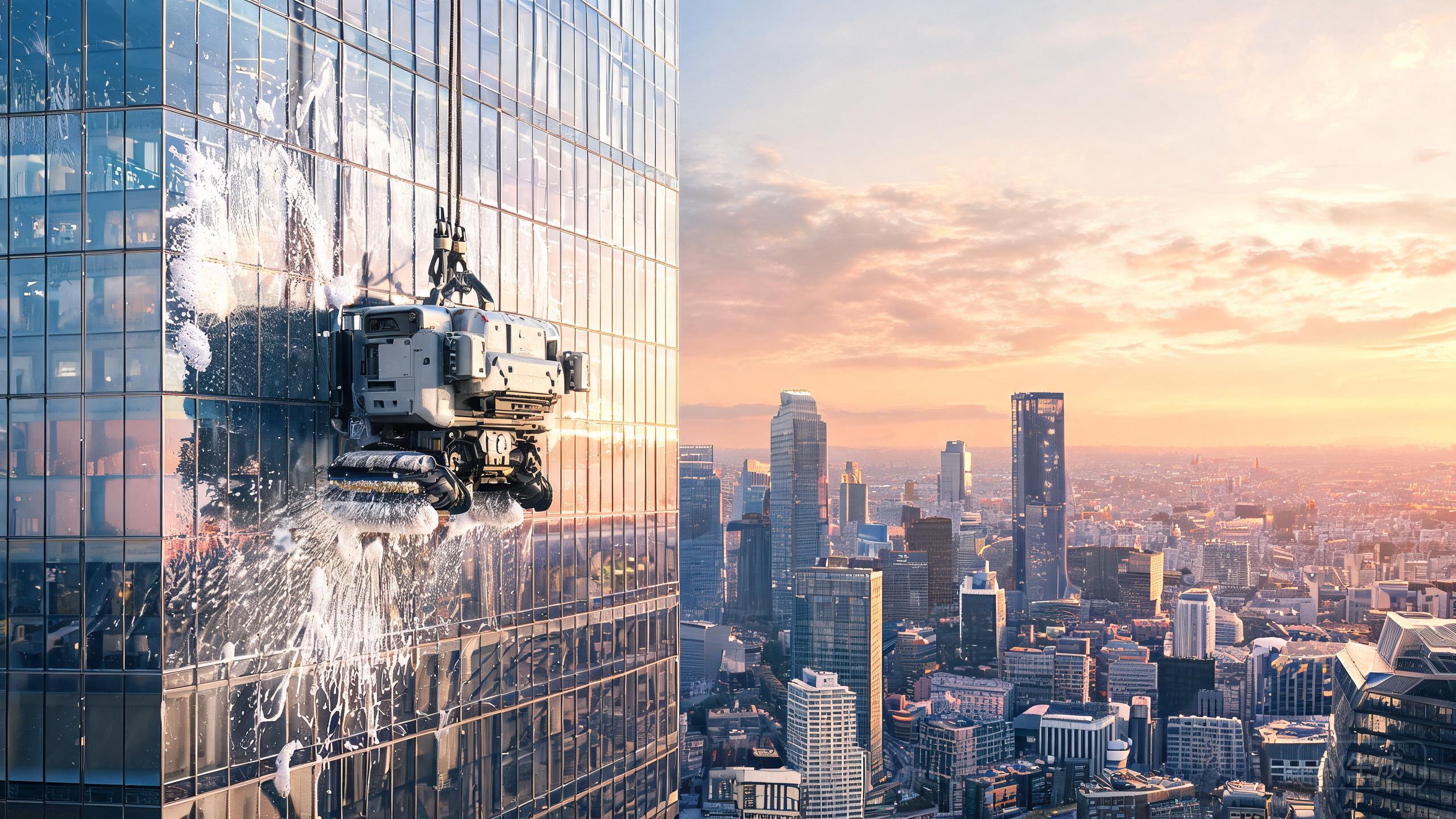
Stone cladding is one of the toughest surfaces in high-rise maintenance: heavy panels, deep joints, and abrasive dust that rope-access crews struggle to clean consistently. As high rise facade cleaning automation matures in 2026, facility managers are asking whether a facade cleaning robot 2026 generation can handle granite, limestone, and composite stone as confidently as glass. This building facade cleaning robot review examines the leading systems in our Facade Cleaning Robots category, weighs robotic facade cleaning vs rope access, and clarifies glass facade cleaning robot cost so you can budget realistically.
Stone Cladding vs Glass: What Changes for a Facade Robot
Most facade robots are engineered around smooth glass, where suction cups or magnetic tracks hold securely. Stone cladding behaves differently: textured surfaces, porous joints, and uneven panel alignment reduce adhesion and complicate navigation. In practice, systems rated for glass need verified performance on stone before deployment. The Kärcher RCW 4, for example, is designed for vertical glass with spray and navigation, and the Serbot AG GEKKO has climbed high-rise glass since 2015 — both are strong glass performers, but stone projects demand careful surface assessment. For mixed facades, the Verobotics Facade Robot, which combines AI inspection and cleaning, offers an advantage: its inspection layer can flag loose stone panels before cleaning begins, a safety step rope crews often skip.
Robotic Facade Cleaning vs Rope Access: Safety and Cost
The core argument for high rise facade cleaning automation is risk reduction. Rope access depends on weather windows, trained technicians, and permits; robots remove personnel from the swing stage for routine washing. On throughput, the Jacky's K3 quotes 600 m working height at 720 m²/h — figures that make a compelling case for large stone-clad towers where repeat cleaning cycles are frequent. Coverage matters too: the Kite Robotics Kite reaches 200 m on glass and complex facades, while the X-Human LingKong K3 targets curtain-wall cleaning for skyscrapers. The honest caveat is that stone cladding often needs pre-treatment and slower passes, so real-world output sits below glass benchmarks. Robotic facade cleaning vs rope access is therefore less a pure speed contest and more a total-cost comparison: fewer safety incidents, predictable scheduling, and reduced scaffolding or gondola hire.
Glass Facade Cleaning Robot Cost and Budget Planning
Buyers frequently ask about glass facade cleaning robot cost, and the answer depends on capability tier. Entry-level tethered systems such as the Lincinco F19-02, built as a tethered base for commercial square windows, sit at the lower end. Mid-range climbing platforms like the GEKKO and the Kärcher RCW 4 add navigation and spray functions. At the top, AI-guided systems command a premium: the Skyline Robotics Ozmo pairs AI-guided window washing with a KUKA arm (the KUKA KR AGILUS is the arm inside Ozmo), earning a 9.5 rating in our category. Research platforms such as the Fraunhofer IFF SIRIUS, a rail-free research system, are not commercial purchases. For stone cladding specifically, budget for surface surveys, custom brushes, and operator training — costs that rarely appear in headline quotes.
Ranking the Best Options for Stone Cladding in 2026
In our 幕墙清洁机器人排名 2026, the Skyline Robotics Ozmo (9.5) leads on intelligence and precision, though its glass-first design means stone projects should validate brush contact and panel-joint handling. The Serbot AG GEKKO (9.0) remains a proven climber with a decade of high-rise glass experience. Verobotics (8.8) is the strongest pick for stone because inspection and cleaning are combined, catching defects before washing. Kite Robotics (8.5) handles complex facades up to 200 m. Kärcher RCW 4 (8.3) and X-Human LingKong K3 (8.2) suit standardized curtain walls, while Lincinco F19-02 (8.0) fits commercial square windows, Jacky's K3 (7.8) covers extreme heights, and Fraunhofer IFF SIRIUS (7.5) serves research. Match the robot to your cladding pattern, not just the headline rating.
Our verdict
Stone cladding rewards robots that combine secure adhesion, inspection capability, and adaptable cleaning tools — not just raw speed. The 2026 lineup shows genuine maturity: Ozmo sets the intelligence benchmark, GEKKO proves durability, and Verobotics bridges cleaning with structural inspection. Before committing, request an on-site trial on your actual stone panels, model total cost against rope access over a multi-year cycle, and treat glass facade cleaning robot cost as a starting reference rather than the final number.